
Include an Upholstered Headboard in Bedroom Maintenance
An upholstered headboard can collect dust, grease, and residue from regular contact, even when sheets are changed frequently. The source highlights this often-neglected surface and recommends beginning with a vacuum rather than immediately wetting the fabric.
Use an appropriate attachment and inspect the care guidance before further treatment. Match cleaning frequency to actual contact, hair products, and household conditions. Keep moisture controlled so the fabric and padding can dry, and avoid assuming that a fresh-looking cover is automatically free of residue.
Look beyond fresh sheets when planning the room
Real Homes highlights a fabric surface that can be missed even during frequent bedding changes. Leaning back with damp hair or hair products creates a different kind of contact from loose room dust. Inspect the area near pillows as well as the top edge. The source's survey headline describes reported habits, not a reason to assume every household has the same contamination level.
Make the initial pass a dry one
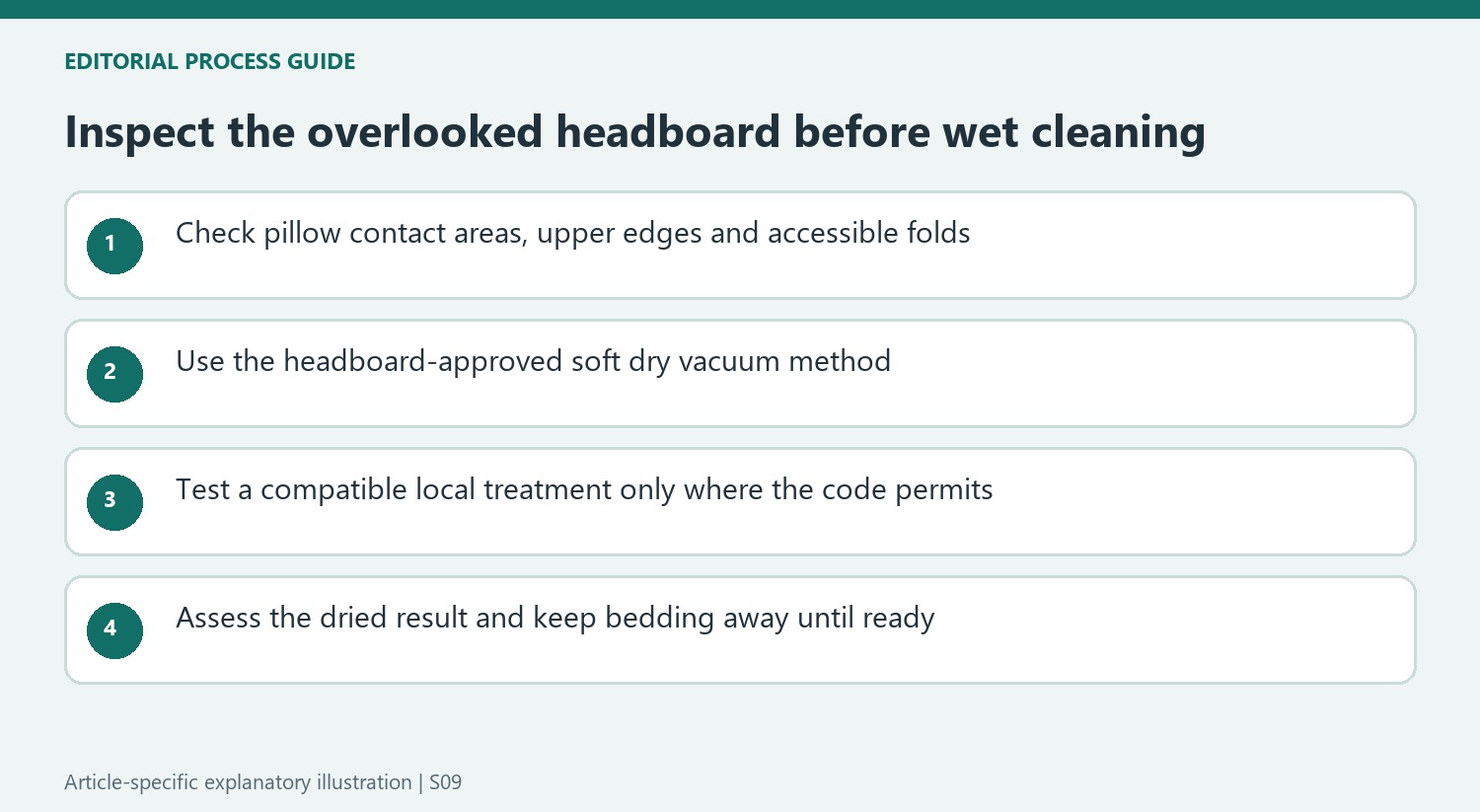
The article recommends starting with a vacuum rather than immediately applying a wet cleaner. Use the headboard's approved soft upholstery attachment and reach folds without pulling the fabric. This removes loose material before stain treatment and is useful even where the care label excludes liquids. Check the furniture instructions separately from laundry guidance for sheets and pillowcases, which may permit very different cleaning conditions.
Test a permitted stain method before broad use
The source describes a mild detergent solution and a hidden test before visible treatment. Keep that method conditional on the actual fabric code, use restrained moisture and observe the dry result. Airflow matters after any permitted damp cleaning. A finishing fabric spray is optional fragrance, not evidence of cleaning or complete drying. If the material is uncertain or visibly altered, seek advice instead of repeating the same wet process.
Use the survey story as a reminder to inspect
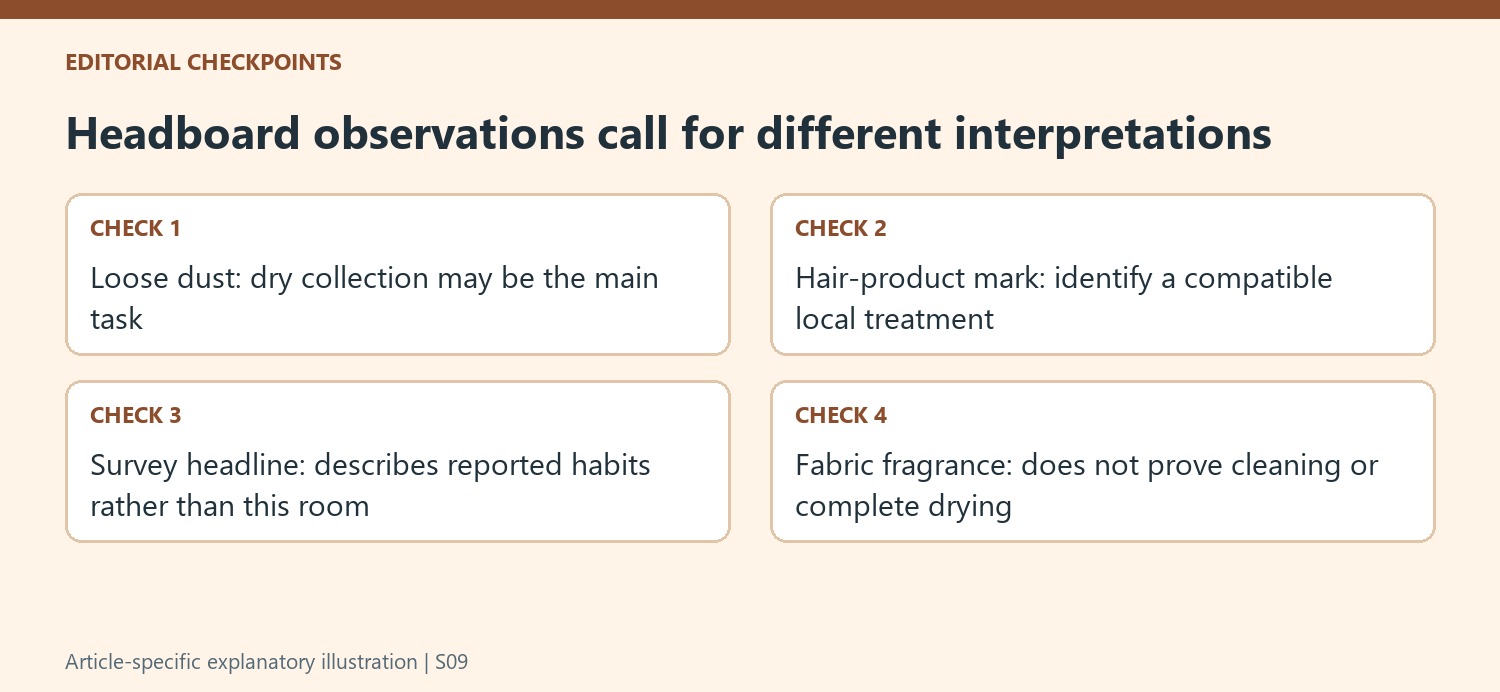
Real Homes reports that headboards are often missed during bedroom cleaning. Treat that headline as a prompt to examine this particular room rather than proof that every household has the same contamination. Look near pillows, along the upper edge and where people lean back. Loose dust, hair-product contact and a wet-hair mark are different exposures, so the resulting task may range from a gentle dry pass to a local fabric-approved treatment.
Fresh bedding does not remove material from a fixed upholstered panel. Add its accessible surfaces to the room's ordinary inspection while keeping its care guidance separate from washing instructions for sheets. A fabric headboard may be harder to wash and dry than a removable pillowcase even if their colors match. Begin by locating the furniture information instead of assuming that the detergent used in the laundry is the right product for its covering.
Let the dry pass reveal what needs further attention
The source recommends vacuuming before wet treatment. Use the supported soft upholstery attachment and reach folds without tugging at the weave or decorative trim. This collects loose material and makes remaining contact marks easier to distinguish. It is also useful when the covering's code rules out liquid home cleaning. A complete dry pass need not turn automatically into an overall wet wash merely because the vacuum has already been brought into the room.
Inspect any persistent patch after loose debris is gone. A mark associated with hair products may need a different compatible approach from a dusty upper edge. The source proposes a mild detergent solution, but that suggestion remains conditional on the actual headboard's care requirements and a hidden test. Keep the chosen liquid restrained and select an approved alternative or professional advice if those requirements do not support the proposed household method.
Use the dry result to judge both cleaning and readiness
Wait for the concealed test to dry before deciding whether to treat a visible area. A damp textile can appear darker without immediately revealing whether color, pile or finish has changed. During permitted cleaning, use suitable clean fabric and follow the required residue-removal stage. Avoid repeatedly adding liquid while evaluating a still-wet patch, because that makes the eventual drying result harder to interpret and can carry more moisture toward the padding.
Provide suitable airflow afterward and keep bedding from pressing against damp upholstery until it is ready for use. A fabric spray is an optional fragrance choice, not confirmation of cleaning or dryness. If odor or marks recur, review their source and the furniture's recommended care rather than applying another scented layer. Regular inspection of actual contact areas offers a practical way to maintain the headboard without turning a general survey statistic into an unsupported diagnosis of the room's hygiene or sleep quality.
References
- 1 in 3 of us forget to clean this area of our bedrooms. Real Homes; Millie Hurst.
Dust and everyday contact can soil fabric beyond the bed linen.


Leave a Comment
Comments (0)