
Dry Outdoor Cushions Fully after Treating Mildew
Outdoor cushions can develop mold or mildew when left damp through the colder months. Inspect the extent of the problem and the cushion care label before starting. Choose a suitable day and location that allow the fabric and filling to dry properly.
Use only a treatment approved for the material and avoid spreading loose contamination around the living space. Serious contamination may require specialist advice or replacement. Once cleaned, protect cushions from prolonged damp storage rather than relying on fragrance to hide recurring mustiness.
Assess both the material and the extent
Ideal Home focuses on outdoor cushions that have remained damp through winter. Its prevention advice centers on suitable outdoor materials and dry storage when cushions are not in use. Before treating a visible mark, inspect the cover, seams and filling. A small surface stain and deeply affected porous padding are different problems; repeated cosmetic treatment cannot establish that contaminated filling is suitable to keep.
Do not treat a household mixture as universal permission
The source proposes vinegar-based cleaning and discusses specialist outdoor-fabric kits. Neither suggestion replaces the cushion maker's directions, and combining household ingredients is not proof of improved mold control. Mold is fungal, so descriptions calling it bacteria should not determine the method. Choose a compatible labeled treatment and obtain suitable advice where contamination is extensive or recurs after the area has dried.

Correct the storage conditions as well
The article's most transferable advice is to prevent prolonged moisture. Check whether the cushions are designed for outdoor exposure, bring unsuitable pieces under cover and inspect the furniture underneath. A dry-looking face can hide damp filling, so leave adequate ventilation before storage. Fragrance may disguise an odor temporarily; it does not remove its cause or demonstrate that the cushion has dried throughout.
Inspect beyond the visible mildew mark
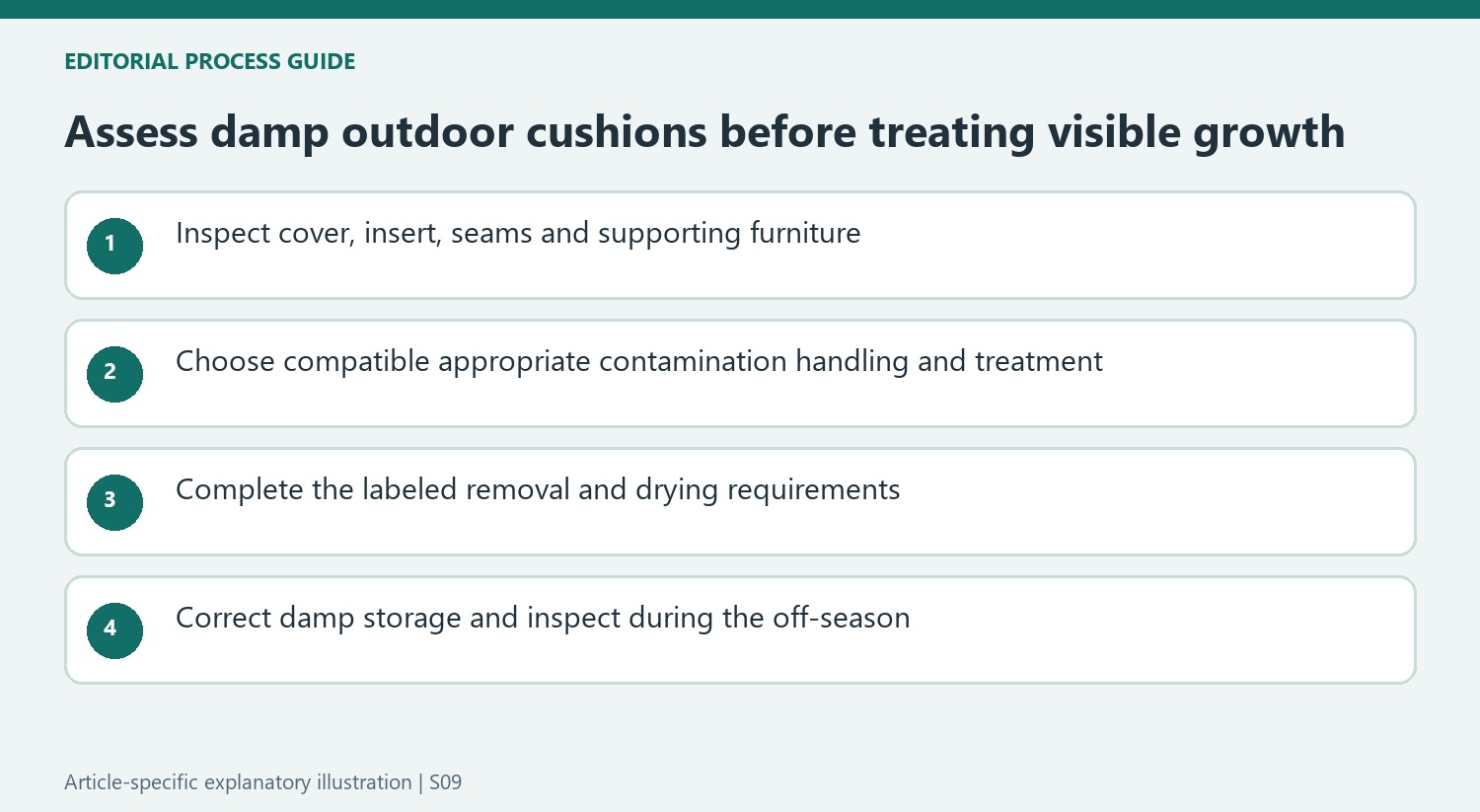
Ideal Home focuses on cushions left damp through winter, making storage history central to the assessment. Check the seams, underside, insert and supporting furniture as well as the outer stain. A small visible patch and deeply affected porous padding are different restoration decisions. Extensive or recurring contamination may require appropriate specialist advice or replacement rather than a succession of cosmetic surface treatments chosen because the cover initially brightens.
Avoid spreading loose contamination into the living space while examining the cushion. Use appropriate handling and the maker's guidance rather than assuming ordinary dry brushing is suitable for every condition. The source sometimes uses bacteria language for mold and mildew, but they are fungal growth; that wording should not drive the treatment choice. Select a compatible labeled method for the actual problem instead of treating every dark outdoor mark as an ordinary fabric spill.
Keep product suitability ahead of household-mixture claims
The article proposes household ingredients and also mentions specialist outdoor-fabric kits. Neither category automatically suits an unidentified cushion or its protective finish. Read the current cushion and treatment directions together, including contact, removal and drying requirements. Mixing familiar ingredients does not by itself establish better fungal control, and an outdoor label does not remove restrictions around color, coatings or adjacent frame materials.
Use the approved tool softness and controlled application rather than rubbing hard because the mark has been present for months. If the process requires a rinse, complete it before assessing the final appearance. If an appropriate treatment does not resolve the issue or the condition quickly returns, investigate the retained moisture and filling rather than adding another fragrance. A surface that smells pleasant can still contain the original source or remain unsuitable for ordinary seating.
Change the conditions that kept the cushion damp
The source's strongest prevention point is to avoid prolonged moisture. Confirm whether the fabric and construction are designed for the outdoor exposure they receive. Water resistance is not the same as a guarantee that an entire assembled cushion never retains water. Bring unsuitable items into appropriate dry storage and inspect the chair beneath them, since a damp or contaminated support can undermine care of an otherwise cleaned cushion.
Provide the supported ventilation and enough time for both cover and core to dry before storage or reuse. Do not pack a dry-looking face over a damp insert in a sealed container. Check stored furniture during the off-season so emerging moisture is noticed before the next summer uncovering. A cleaning kit or protective finish may be considered only under its material-specific guidance. The lasting improvement comes from resolving the damp conditions alongside any approved treatment, rather than relying on scent or repeated surface cleaning to disguise recurrence.
References
- How to get mould and mildew out of outdoor cushions quickly and effectively. Ideal Home; Katie Sims.
Weather exposure and storage conditions matter alongside visible cleaning.


Leave a Comment
Comments (0)