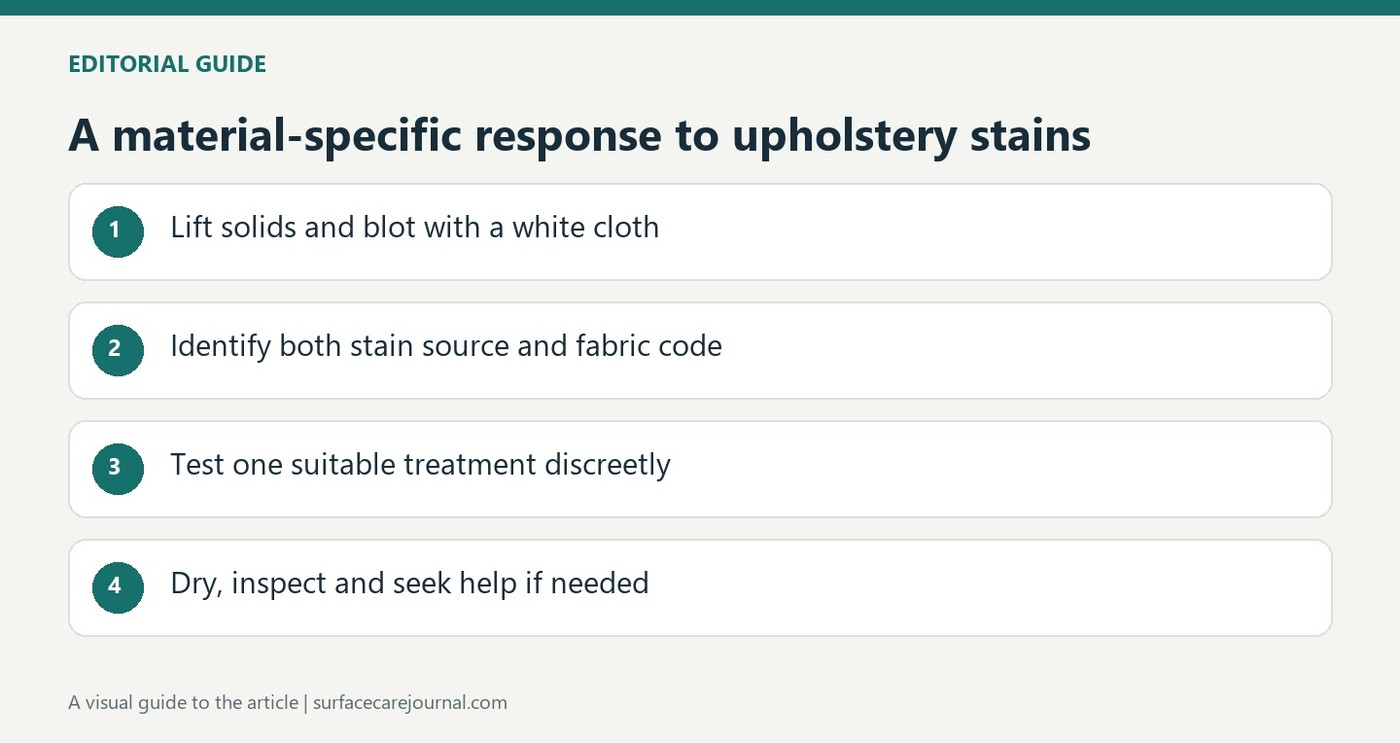
Blot Upholstery Spills Before Choosing a Stain Treatment
Ideal Home's stain-removal rules begin with addressing a spill promptly and lifting loose solids before dealing with the liquid. A clean absorbent cloth should blot the area rather than scrub it. Rubbing can spread the stain, drive residue farther into the fabric or damage delicate fibers.
Identify both the stain and the upholstery material before selecting a product, then test as directed in an inconspicuous place. The article treats different residues and fabrics as different cleaning problems, rather than recommending the strongest available solution. Use controlled amounts and follow the furniture's care code so stain treatment does not create a larger wet area or an altered patch.
Let the stain and material determine pretreatment
Ideal Home distinguishes oil-based residues from other spills and warns that excess soaking can cause its own problems. An absorbent pretreatment and a water-based wash are different choices, not a combined answer to every stain. Check the furniture code and a hidden area before introducing either. Use a white cloth so color from the cleaning material does not create another mark on light upholstery.
Do not turn urgency into repeated heavy application
The source recommends quick attention, but that means collecting the spill and selecting a suitable method, not applying every product in the cupboard. Follow the chosen cleaner's dose and contact time. Excess moisture may spread the affected area and take longer to dry. Remove residue as directed, then assess the dry result rather than continuing to add liquid while the original spot is still wet.

Recognize when to stop and seek advice
The article notes that an older stain is not necessarily hopeless, while also acknowledging the limits of home treatment on delicate furnishings. If several compatible attempts do not help, professional cleaning may be appropriate. Prepare by keeping the correct stain product and clean cloths accessible, and use suitable protective covers where practical. Prevention reduces exposure, but it does not eliminate the need to respond promptly to a new accident.
Collect the spill before choosing the treatment
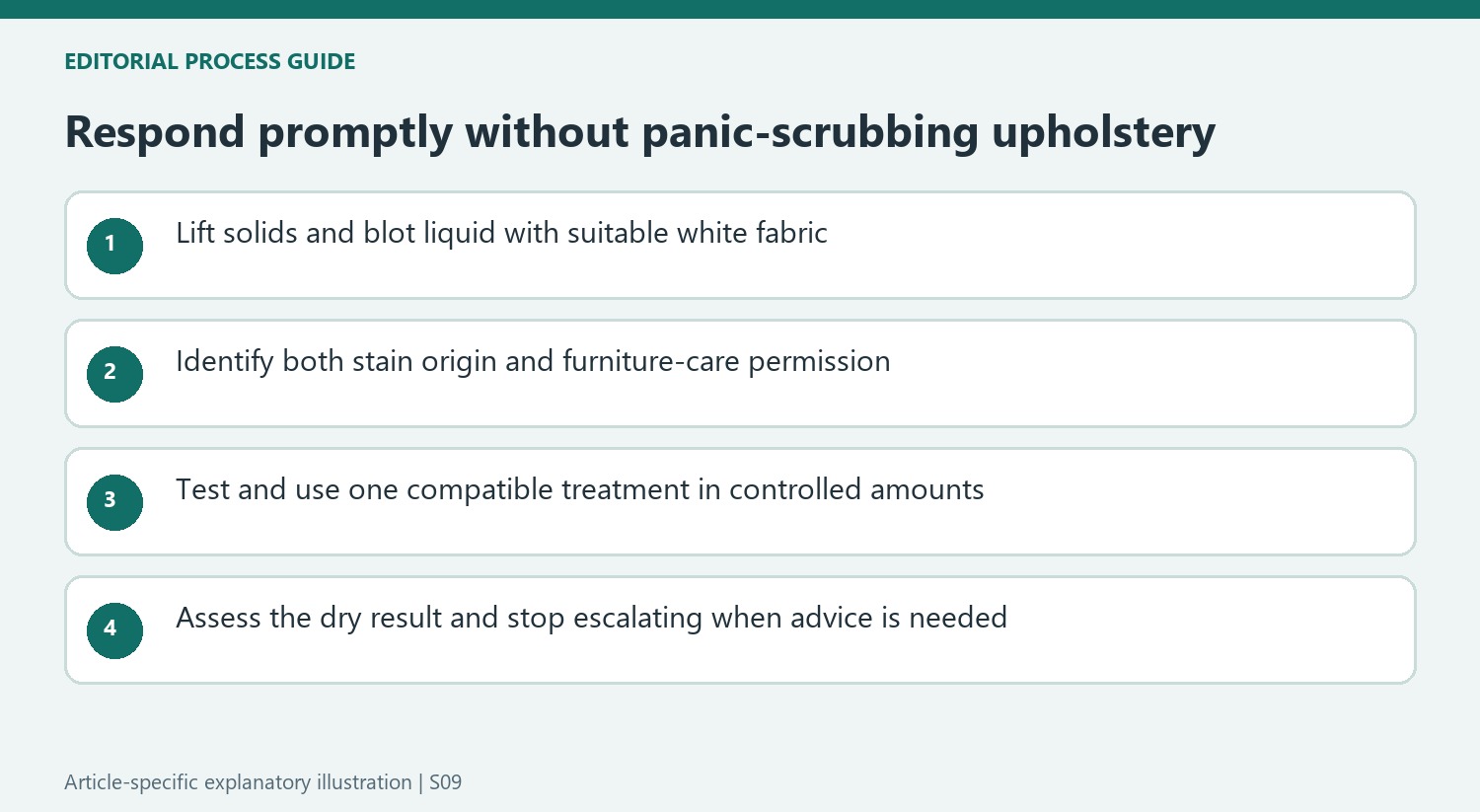
Ideal Home's first rules combine quick attention with restrained handling. Lift accessible solids using a suitable dull utensil, then absorb liquid with clean white fabric. This reduces the material available to spread while avoiding dye transfer from a colored cloth. Fast response should mean useful collection rather than immediate heavy scrubbing. Pressing the spill farther into the weave can make the visible area larger and the later treatment more difficult.
Identify what spilled and which material received it before selecting a stain product. An oil-based residue, a colored drink and muddy solids are not identical cleaning problems. The furniture code then limits which of the stain-specific options may be used. A recommendation for carpet cannot automatically move to a sofa, and an approved treatment for one seat fabric is not permission for a leather, velvet or other delicate covering nearby.
Let compatibility govern pretreatment and moisture
The source distinguishes absorbent pretreatment for some oily messes from water-based approaches to other residues. Read these as choices tied to the actual stain and material, not an instruction to layer every household ingredient over the same patch. Follow the selected product's required amount and contact stage, and use a concealed test under the maker's guidance. A stubborn stain does not suspend those requirements just because the first familiar cleaner has failed.
Excess soaking can spread the affected area and create a longer drying problem. Keep moisture within the upholstery's limits and collect the dirty treatment as directed. If a local mark is still wet, avoid immediately adding another full dose because it has not yet become invisible. Allow the supported process to finish, then inspect the dry result so cleaner film, a drying outline and surviving stain are not all mistaken for the same issue.
Prepare for incidents without promising perfect prevention
An older stain is not automatically beyond help, but the guide also recognizes the limit of repeated home attempts on delicate furnishings. Keep a record of products already used if professional assessment is needed; that gives the next cleaner a clearer starting point than an unidentified mixture. Stop escalating when the material response is uncertain. Preserving the fabric's texture and color is part of the outcome, not an obstacle to be ignored while chasing the last visible trace.
Keep suitable cloths and the appropriate approved stain product accessible so the next response can be prompt and specific. Protective coverings may reduce exposure where practical, while their own care instructions still apply. Darker or patterned fabrics can hide marks without removing soil, so appearance alone should not determine whether an accident needs attention. A useful prevention plan makes correct action easier without pretending spills can be eliminated or that a strong universal cleaner can safely solve every event.
References
Fast action helps, but rubbing or using the wrong cleaner can push a small accident deeper into fabric.


Leave a Comment
Comments (0)