Handle Pet Accidents and Loose Fur as Different Upholstery Jobs
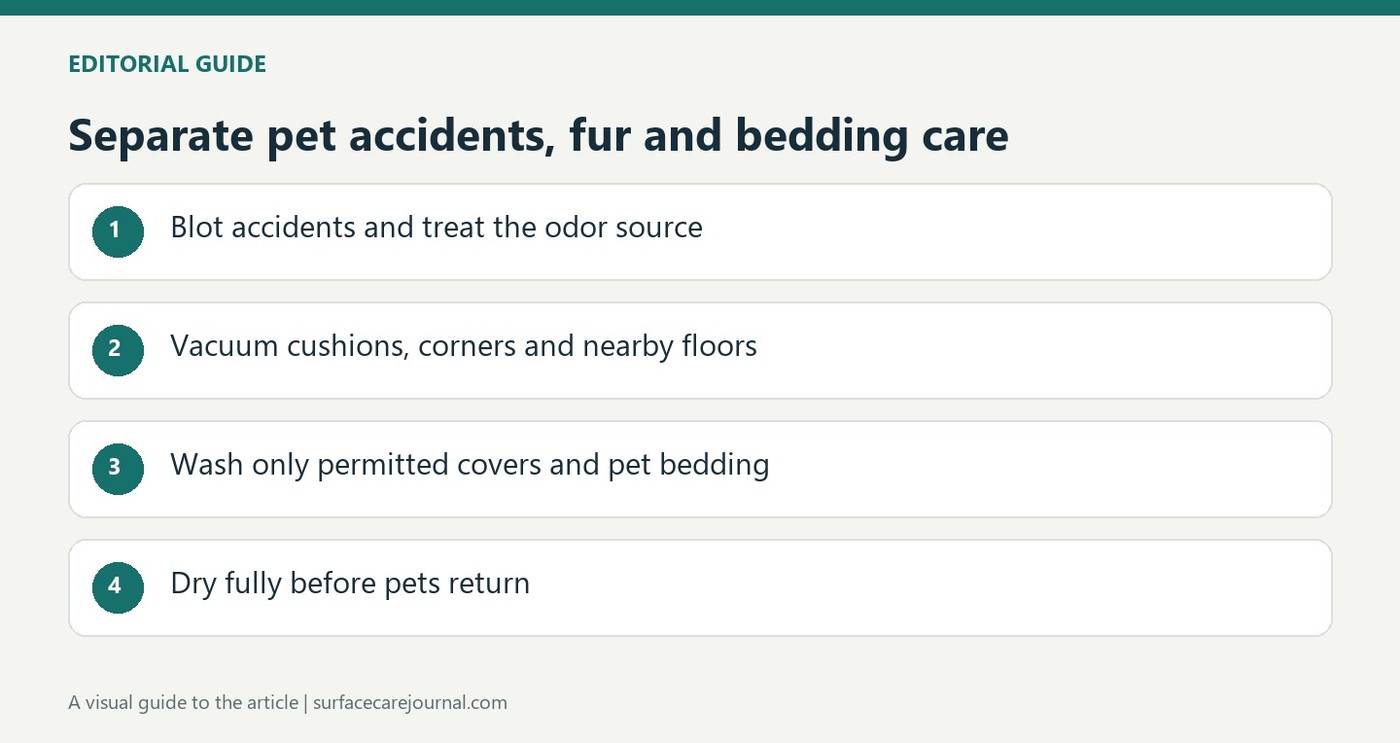
Ideal Home's pet-cleaning guide recommends dealing with accidents as soon as they are noticed. Blot the area and choose a compatible pet-stain and odor treatment rather than only masking the smell. Residual odor can attract a pet back to the same spot even when the visible mark looks better.
Loose hair and dander call for regular vacuuming with the correct upholstery attachment. Check the furniture care code before introducing a wet cleaner or extraction machine, and follow the product's guidance on keeping pets away until the area is ready for use. Combining prompt spill response with routine debris removal addresses two distinct sources of mess instead of relying on occasional deep cleaning alone.
Keep odor removal tied to the source of the mess
Ideal Home explains that a pet may revisit a spot if its scent remains after visible cleaning. Use a pet-stain product permitted for the fabric and follow its contact and removal directions. A room fragrance does not perform the same job. A machine may be useful for some older contamination, but upholstery suitability must be established before adding water, heat or extraction.
Include the places where loose hair gathers
The article extends regular vacuuming beyond the seat to cushions, curtains and areas with folds or corners. A suitable upholstery head or handheld vacuum can reach those surfaces without treating every problem as a wet stain. Clean the floor around the furniture as well. Lint tools can help with remaining hair where permitted, but they should not damage delicate fabric or substitute for addressing a liquid accident.
Wash permitted bedding and dry it completely
Pet beds and washable cushion covers can collect everyday dirt and odors even without an obvious spill. Check their labels separately from the main sofa and follow the approved washing method. The source emphasizes complete drying before reuse and checking whether tumble drying is allowed. Keeping the pet's sleeping area maintained reduces another source of loose dirt reaching the upholstered furniture between deeper cleaning sessions.
Deal with an accident at its source
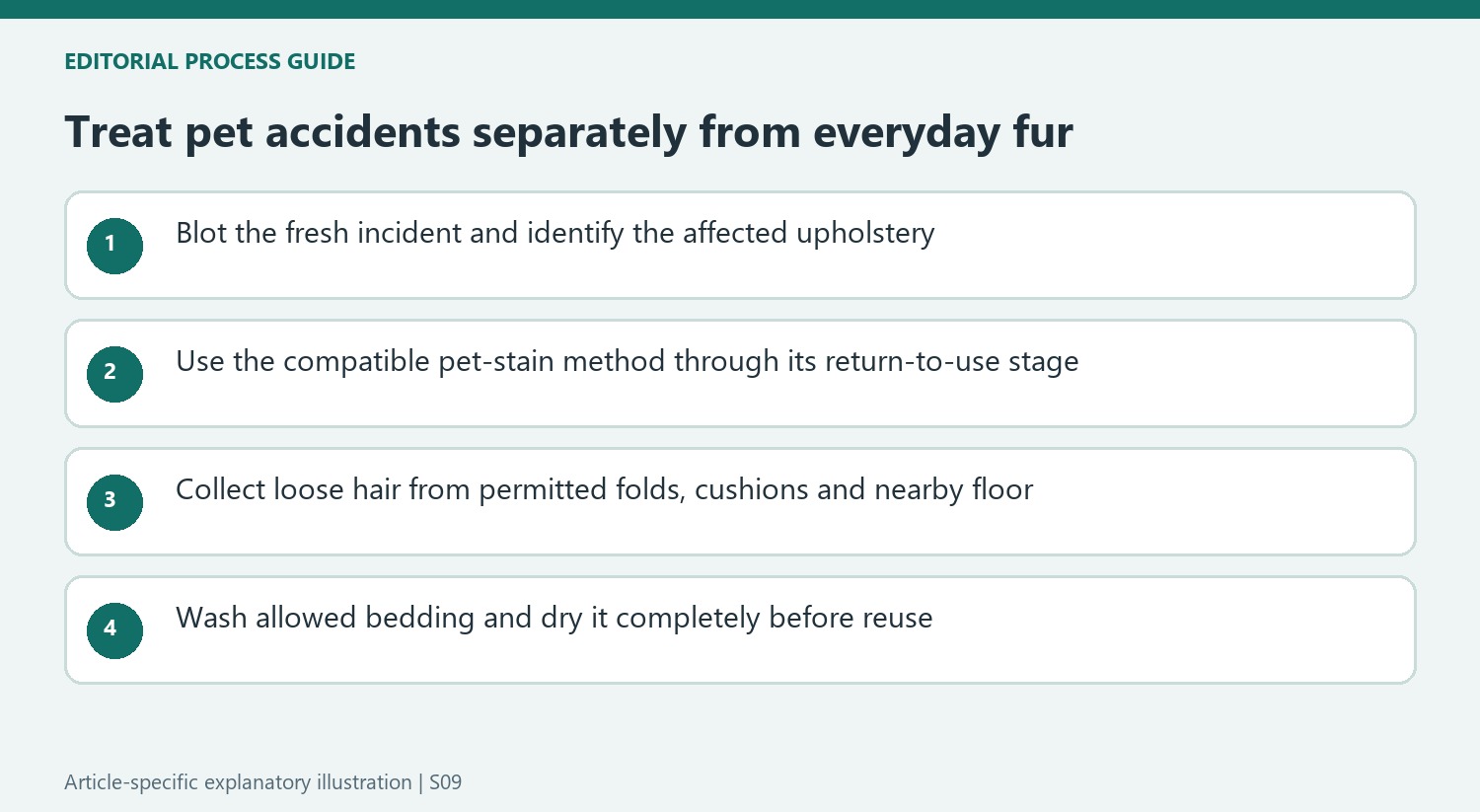
Ideal Home emphasizes prompt response to pet mess because visible staining and lingering scent are related but distinct problems. Blot an appropriate fresh liquid promptly, then select a pet-stain product compatible with the actual furniture. Follow its contact and removal directions rather than simply adding a room fragrance after the visible mark fades. The source explains that a remaining scent may encourage a pet to return to the same area.
Check the upholstery code before any water, heat or extraction is introduced. A pet-oriented label does not automatically establish compatibility with every textile, backing or protective finish. The current instructions also determine when pets may return to the treated area. Keep that return-to-use stage in the plan instead of assuming a pleasant smell or a dry-looking top surface proves that the full process has been completed.
Give loose fur its own collection routine
The guide distinguishes liquid accidents from daily hair and dander. Use suitable upholstery attachments on permitted cushions, sofa folds and accessible corners, including curtains where their care instructions allow it. A handheld tool can improve access but should still fit the material and task. Cleaning only the favorite seat leaves particles on surrounding fabric that can quickly return to it through ordinary household use.
Maintain the floor around and beneath the furniture using its own suitable method. This reduces another reservoir of loose dirt without turning every dusty area into a wet upholstery problem. Lint tools may help collect remaining hair on compatible fabric, but a scraper intended for carpet should not be assumed appropriate for a delicate seat covering. The useful goal is regular collection with the right tool, not forceful friction across every pet-accessible surface.
Include the pet's bedding in the wider care plan
Beds and washable covers accumulate ordinary odor and soil even when there has been no obvious accident. Read those labels separately from the main couch and follow their permitted washing and drying requirements. A pet bed's filling may dry more slowly than its outer face, making complete readiness important before reuse. Do not assume that an outdoor drying suggestion establishes disinfection or overrides the textile's own handling limitations.
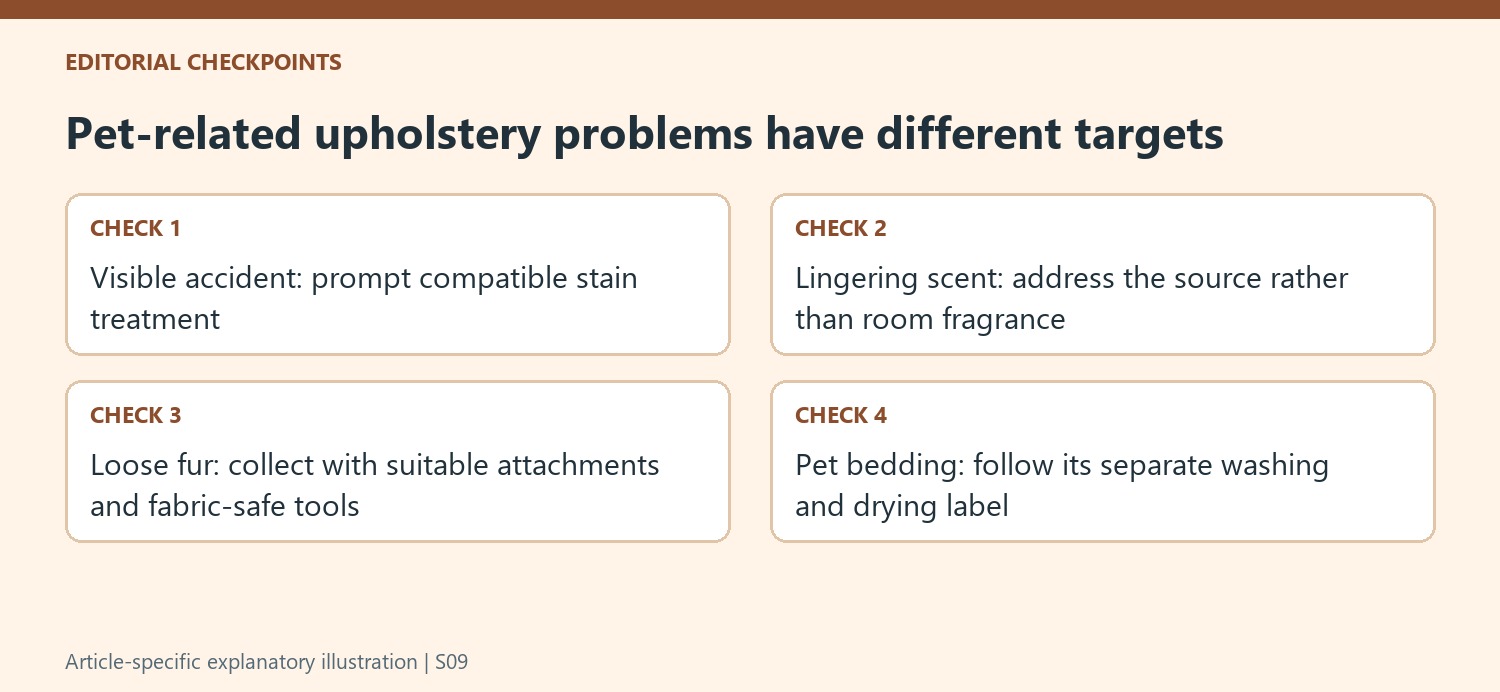
Keep accident response, fur removal and bedding maintenance as linked but separate tasks. The first targets specific contamination, the second collects loose material and the third maintains a frequently used resting area. Room sprays do not substitute for any of them. A practical routine responds to the home's actual pets and exposure while keeping approved products accessible for prompt use, reducing dependence on occasional aggressive deep cleaning after several different sources of dirt and odor have accumulated together.
References
- The cleaning tips every pet-lover should know to keep their home spotless and hair-free – they’re *so* quick and easy. Ideal Home; Lauren Bradbury; Rebecca Knight.
Prompt blotting addresses a spill, while regular suitable vacuuming tackles the hair and dander left behind.


Leave a Comment
Comments (0)