
Check Fixed and Removable Upholstery before Home Cleaning
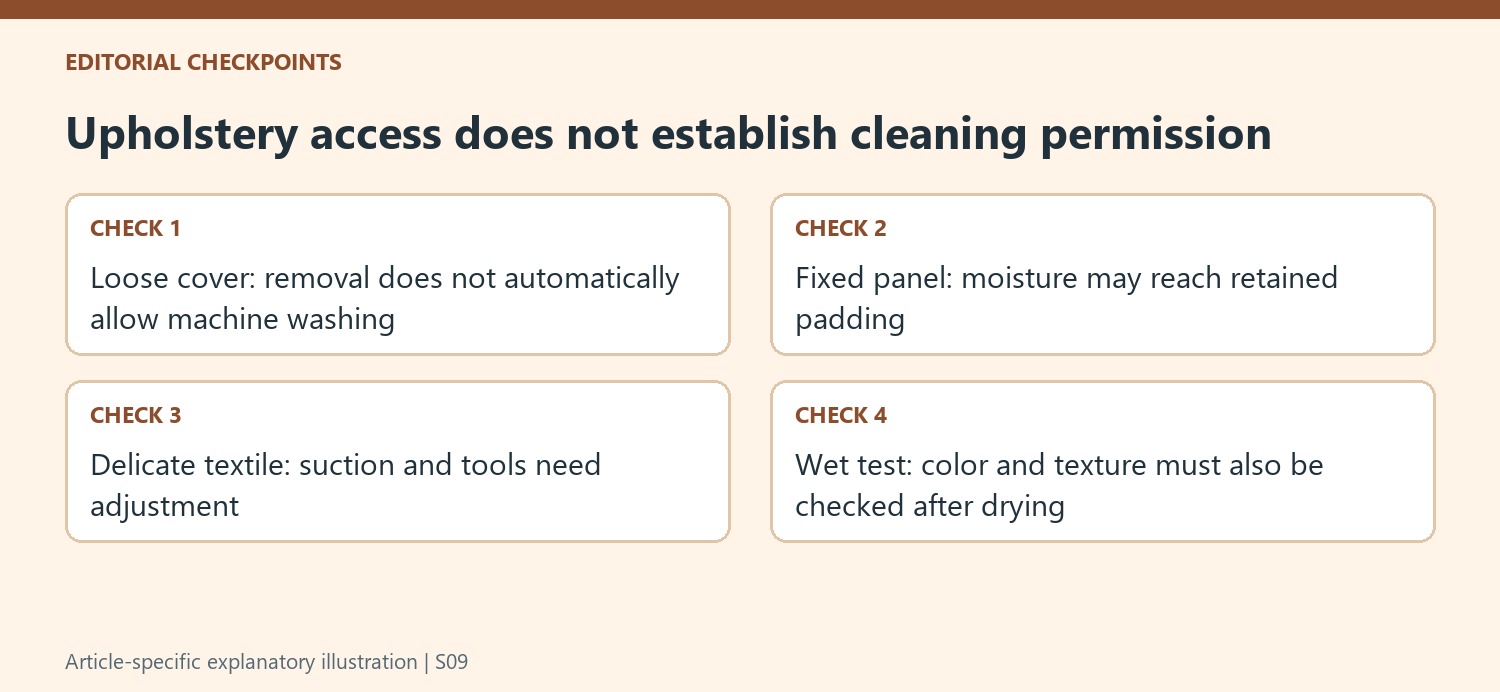
Upholstery cleaning includes fixed chair fabrics as well as loose cushions and covers. Cotton, linen, velvet, and leather can require different methods, so removing a cover does not automatically make it suitable for a washing machine. Read the manufacturer guidance first.
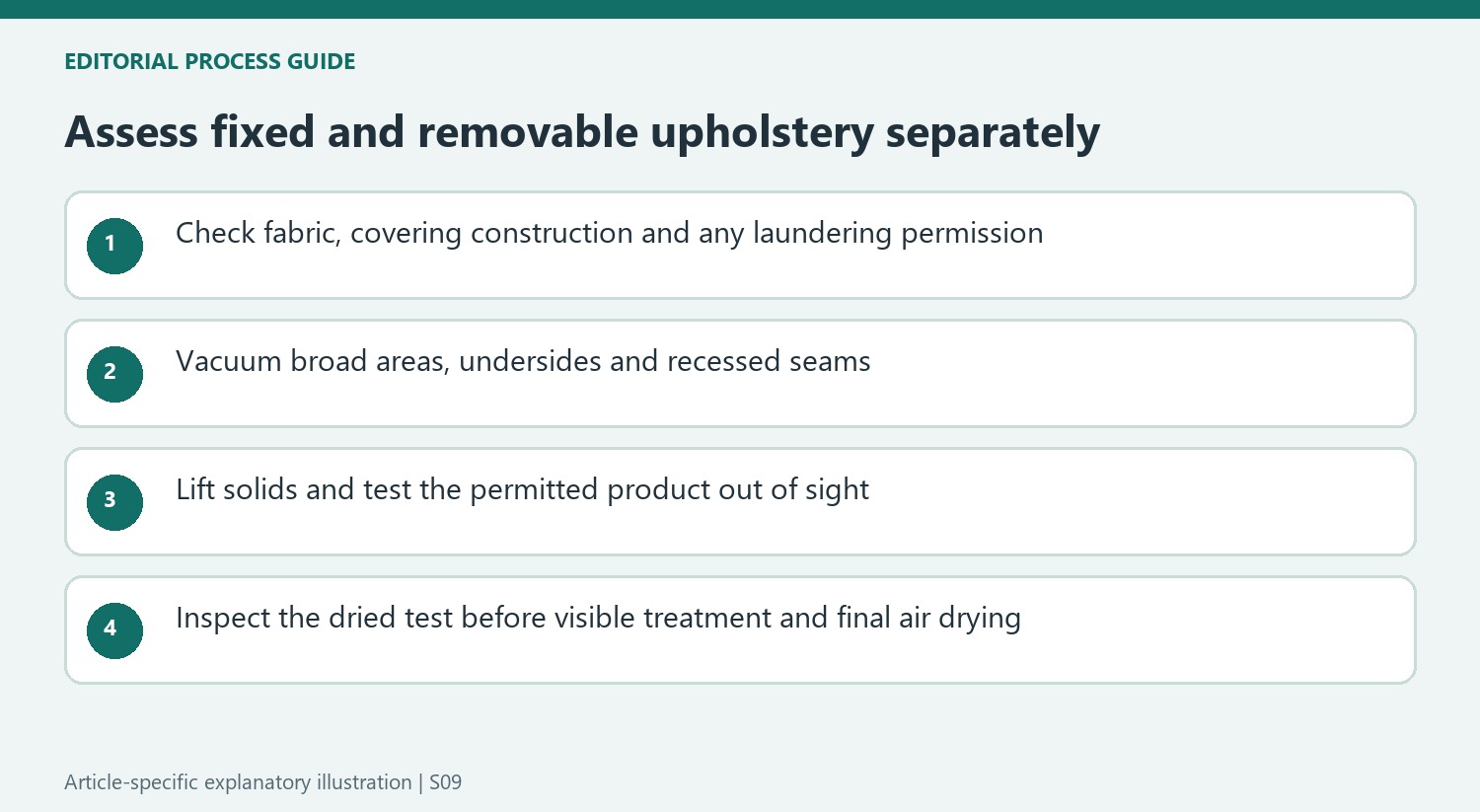
Vacuum loose debris before treating marks and test a permitted cleaner in a hidden area. Check for color change and altered texture as it dries. The same cautious assessment applies to a vintage armchair, headboard, or upholstered seat.
Vacuum seams as well as broad fabric panels
Real Homes recommends removing loose cushions where appropriate, vacuuming their undersides and then working on the furniture beneath them. A crevice tool can reach seams, button recesses and corners missed by the main upholstery head. Use a setting suited to delicate fabric. This preparation removes crumbs before they are worked into the weave during subsequent treatment and is useful even when no liquid cleaning is allowed.
Lift solids and dab instead of forcefully rubbing
The source suggests removing solid residue with a teaspoon before approaching the remaining mark. Its fabric-specific advice emphasizes patient dabbing rather than pushing the stain deeper or distorting the surface. The care tag and a hidden test still control the choice of liquid. Velvet, linen and silk should not be treated as interchangeable merely because all three are upholstered fabrics.
Wait for the fully dry result
A hidden test should be allowed to dry so color and texture changes become visible before cleaning the front of a chair or sofa. Follow the permitted method's rinsing or removal instructions and keep moisture controlled in padding and fixed areas. The source advises air drying rather than applying heat. If the material is unclear or the mark persists on a delicate piece, professional advice can avoid an increasingly aggressive home treatment.
Identify what can actually be removed or washed
Real Homes defines upholstery as both fixed fabric and loose covers, a useful distinction before planning access. A loose cover can be lifted from the cushion without necessarily being machine washable. Check its own label and the furniture instructions before deciding on laundering, temperature or drying. Fixed areas also cover padding and may hold moisture differently from a removable textile laid out by itself, so the same fabric name does not make those cleaning situations identical.
A vintage armchair, headboard and upholstered seat each have different shapes, trim and accessible surfaces. Identify the textile and any guard treatment before selecting a product. Delicate velvet or silk may warrant specialist advice when the care requirements are uncertain. A general household recipe in a broad guide is not evidence that every item in those categories tolerates the same liquid, brush action or amount of moisture.
Make dry collection reach the recesses first
The source recommends taking appropriate loose cushions off the piece and cleaning their undersides before reaching the furniture beneath. Work with the suitable upholstery tool across broad areas, then a crevice tool around seams, buttons and corners. Use the suction and attachment appropriate for delicate fabric instead of forcing a powerful head into decorative recesses. Removing particles now prevents them being moved through the weave by a later permitted damp clean.
When a spill includes solid residue, lift it gently with a suitable spoon edge before treating the remaining mark. Dab rather than aggressively rub so the material is not driven inward and the textile surface is not distorted. Refresh the absorbing cloth face as soil transfers. A convenient wipe or household product still needs compatibility with the actual covering; its general gentleness elsewhere does not establish that it belongs on a particular upholstered panel.
Use a fully dried test to guide the visible work
The guide asks for a concealed-area test, which is most useful when the result is inspected after drying. Look for color change, a boundary mark or altered texture before proceeding across the front of a chair. A wet patch can mask these effects. If the method is permitted, follow its removal or rinse directions with restrained moisture rather than widening the treatment because the first application has not yet dried clear.
Air drying and suitable circulation complete the process; direct heat should not be used to rush a damp fabric back into service. Keep fixed padding and any washed cover fully ready before ordinary use under the care instructions. Persisting marks on a delicate piece can be a reason to stop and obtain professional advice. The practical routine separates access, dry debris, compatible spot treatment and complete drying so a well-intended home clean does not turn into escalating liquid and abrasion across an increasingly large area.
References
- How to clean upholstery – 3 steps to care for chairs and more furniture yourself. Real Homes; Lucy Searle.
Fabric composition and care instructions matter more than whether the cover detaches.


Leave a Comment
Comments (0)