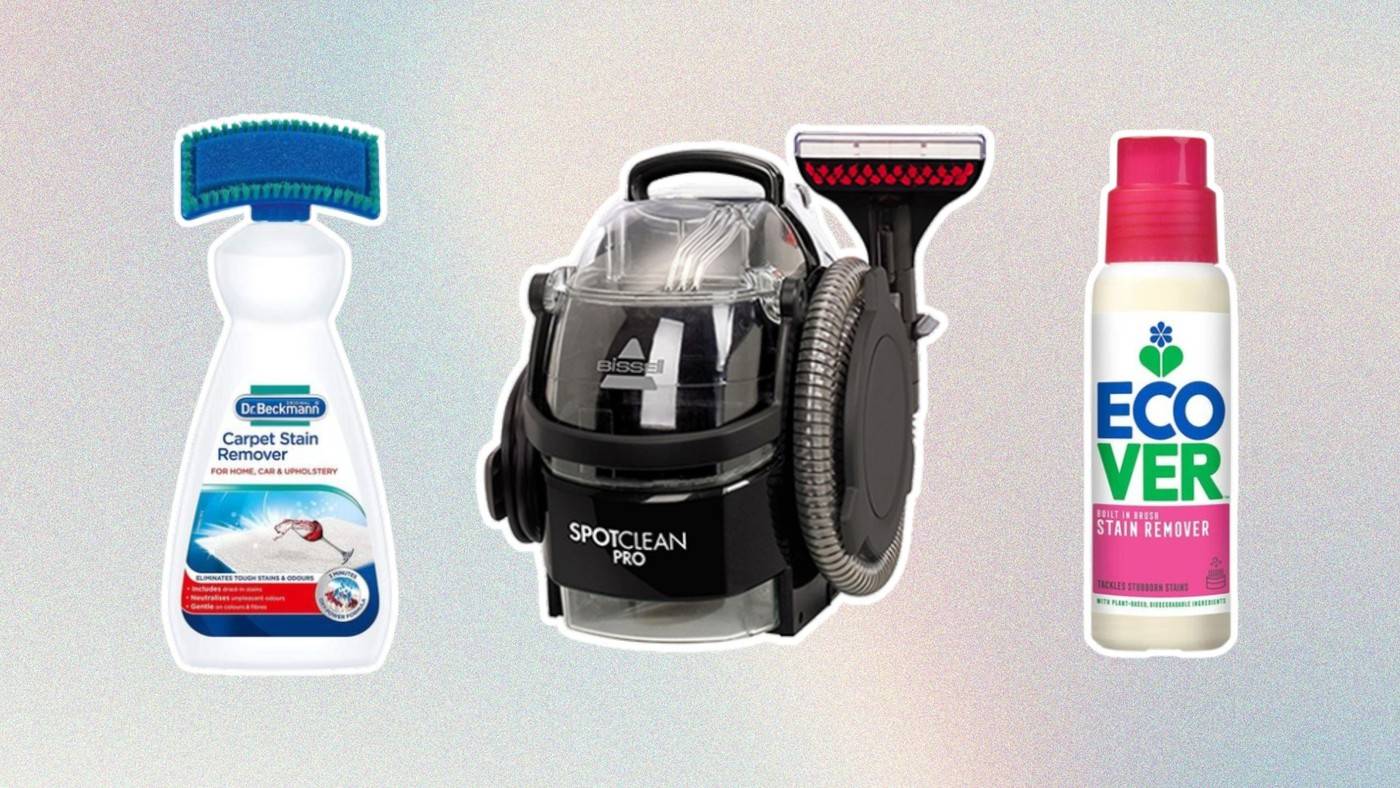
Compare Upholstery-Cleaning Sprays with Extraction Machines
Upholstery cleaners include bottled stain treatments and appliances that apply and recover liquid. They differ in how they are used, which messes they target, and the surfaces they permit. A product suitable for one synthetic fabric may exclude velvet, silk, vinyl, or leather.
Read both the furniture care code and the cleaning product instructions before application. Start with prompt blotting where appropriate and respect the required waiting time. A positive review does not override restrictions for the actual upholstery in the home.
Match the product format to the job size
Real Homes compares small built-in-brush stain removers with a portable extraction machine. Its reviewers found some bottled products useful for local accidents but inefficient for a large part of a sofa or rug. Decide whether the task is a fresh spot, an outdoor cushion or broader fabric cleaning before buying. A highly rated small-area treatment may still be the wrong practical tool for an entire couch.
Compare carrying weight and reach for a machine
The guide recommends checking tank capacity, hose length and cable length, not just the bare appliance weight. Water adds weight while the machine is moved around furniture or between rooms. Plan where it will sit, how the hose reaches the upholstery and how the recovery tank will be emptied. Check which cleaning solutions are permitted and the cost of replacing a supplied sample bottle.
Keep the care label and patch test in the process
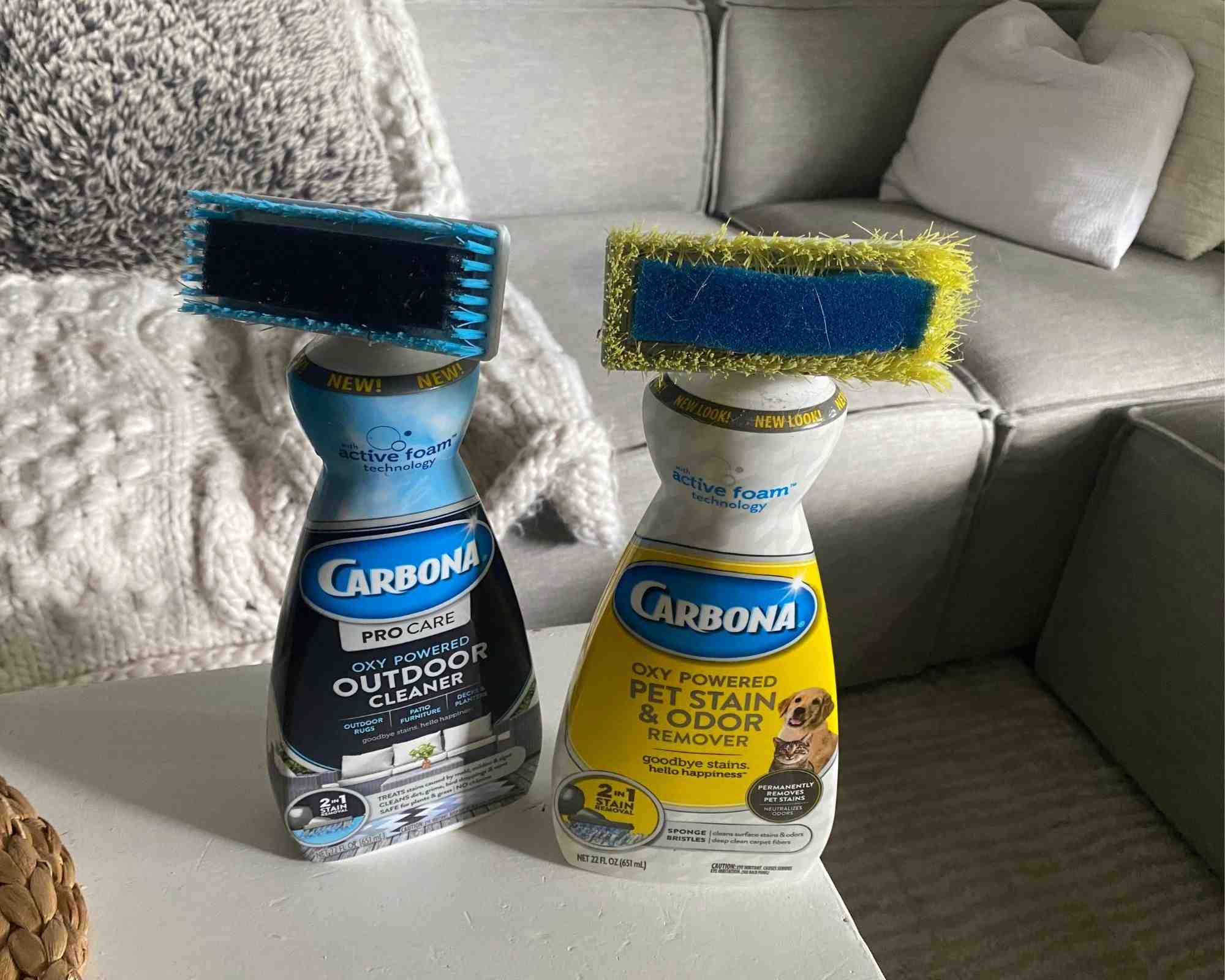
The source emphasizes that natural and synthetic fabrics can respond differently and that product application varies between sprays, foams and other formats. Some require gentle blotting, while others have specific brushing or waiting directions. Read both labels and test a hidden area before visible treatment. Use only the required amount, remove residue as directed and allow the fabric to dry before judging the result or returning it to use.
Choose the format after defining the affected area
Real Homes compares bottled local treatments with portable appliances, making job size a useful starting distinction. A built-in brush may be convenient for an isolated spill but slow across a broad sofa panel or rug. Describe the actual task before shopping: a fresh spot, outdoor cushion and fuller interior clean can need different formats. A high review score for one small accident does not establish efficient coverage of a whole piece of furniture.
Check the product exclusions at the same time. The guide notes restrictions for materials including velvet, silk, vinyl and leather on some treatments. A fabric's natural or synthetic origin can affect its response, while the finished furniture code supplies the practical permission. Read the current cleaner label and furniture guidance together rather than treating upholstery as one universal surface category. Positive household testing cannot override an exclusion that applies to the actual piece.
Calculate machine handling with the tanks in use
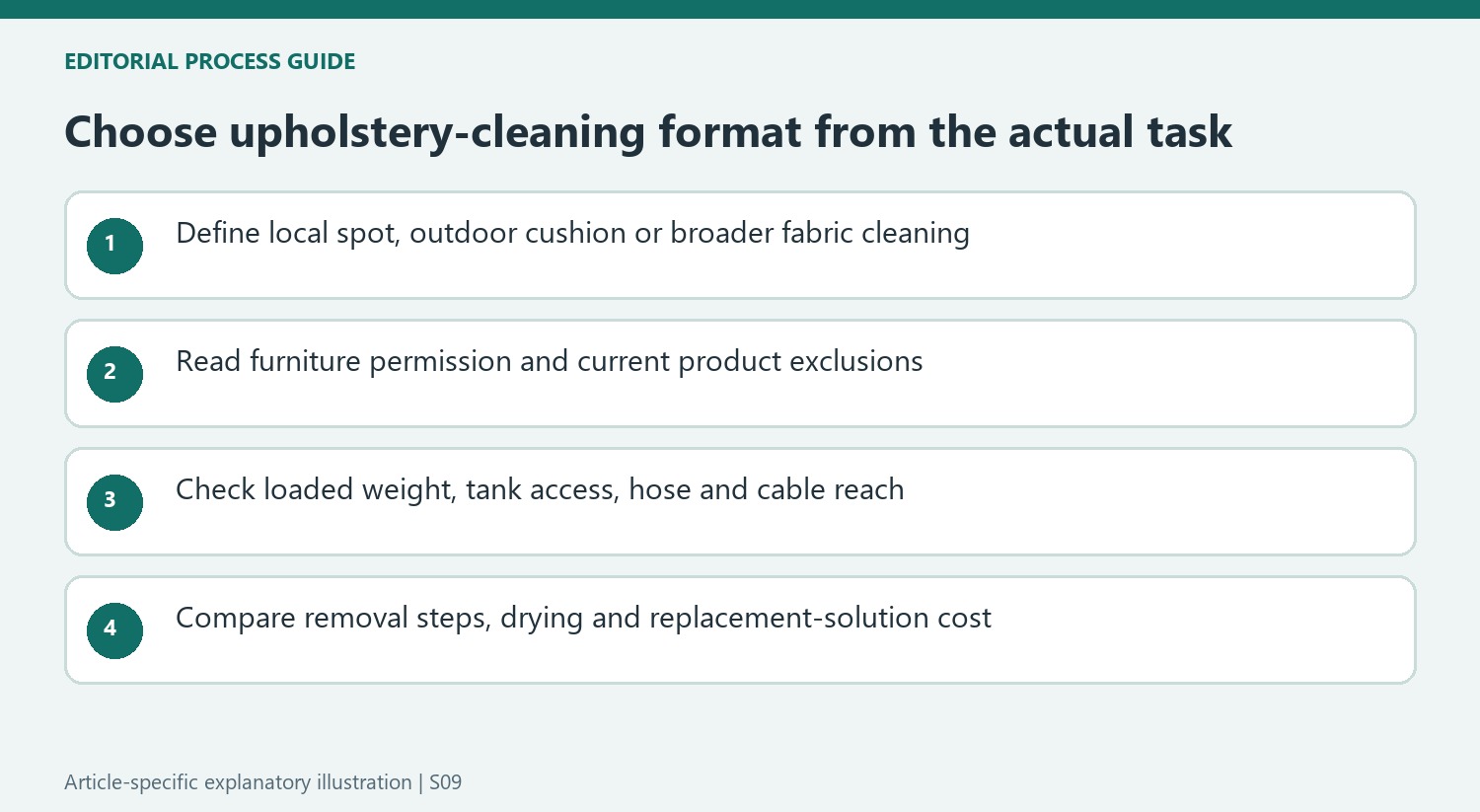
The source recommends looking beyond a portable machine's empty weight. Water and recovered liquid change the load carried between rooms, so assess the normal filled condition and the route to the cleaning area. Check where the appliance can sit without pulling against the furniture. The hose and power cable must reach the intended panel under the machine's instructions, not merely extend far enough on a specification diagram to appear plausible.
Tank capacity also changes how often the cleaning session stops for filling or emptying. A large tank may reduce interruptions while making handling heavier. Plan a suitable place to empty and clean the recovery tank afterward. Include maintenance of brush heads and attachments when comparing convenience; the guide notes that even bottled products with integrated brushes need cleaning after use. A satisfying visible result is only one part of owning and maintaining the system.
Compare the full permitted routine and recurring cost
Some products are blotted, some use a specified brush and others need a contact period or rinse. Follow the exact current directions after a hidden-area test rather than combining the most forceful step from each reviewed item. Use the required amount, remove residue as directed and allow the fabric to dry before judging the result. A treatment that appears successful while wet may still leave an outline or altered texture once the seat is ready for use.
For an appliance, check the allowed cleaning solution and the price of normal replacement bottles after any included sample is exhausted. An inexpensive substitute may not meet the equipment requirements. For a bottled treatment, consider useful coverage for the actual stain and material rather than shelf price alone. The strongest purchase is the format whose complete compatible routine fits the task, handling needs and maintenance budget, with its review evidence understood as household observations on the messes the writers actually encountered.
References
- 6 of the best upholstery cleaners — stain-removing solutions and machines that work. Real Homes; Christina Chrysostomou; Annie Collyer.
Material restrictions remain important even for products designed around furniture stains.


Leave a Comment
Comments (0)