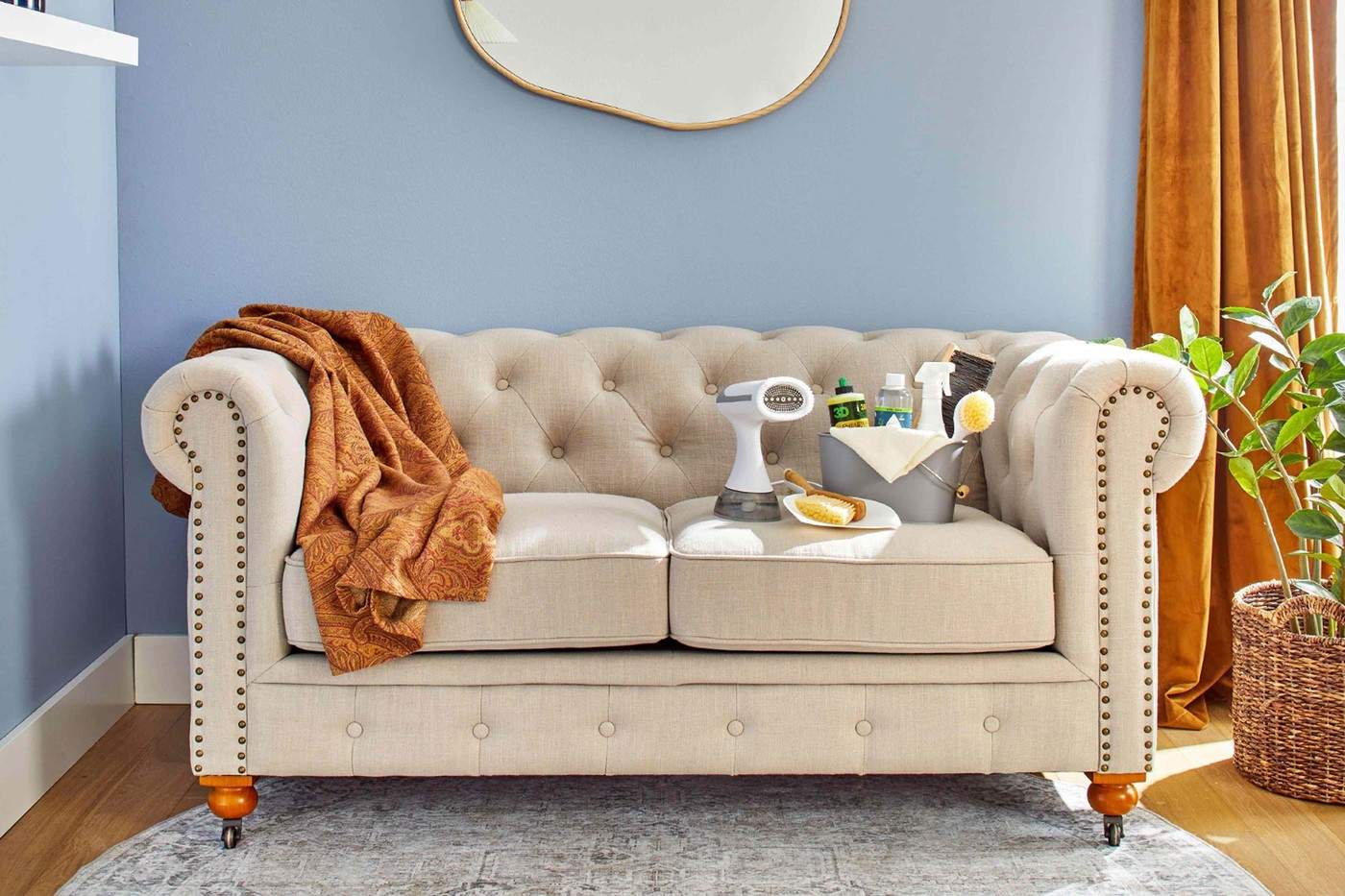
Check the Couch Material Before Choosing a Cleaning Process
BHG's couch guidance makes fabric compatibility and a controlled cleaning method the starting points for a fuller clean.
Prepare the fabric instead of skipping to the machine
Better Homes and Gardens makes the upholstery type and manufacturer instructions the starting point for deciding how a couch can be cleaned. Its preparation includes removing cushions and loose debris, then vacuuming from top to bottom with attention to seams and gaps. Any stain product should be tried in a hidden area first. Delicate, antique or water-damaged furniture can require professional care rather than an improvised machine treatment.
Avoid concentrating heat and moisture in one place
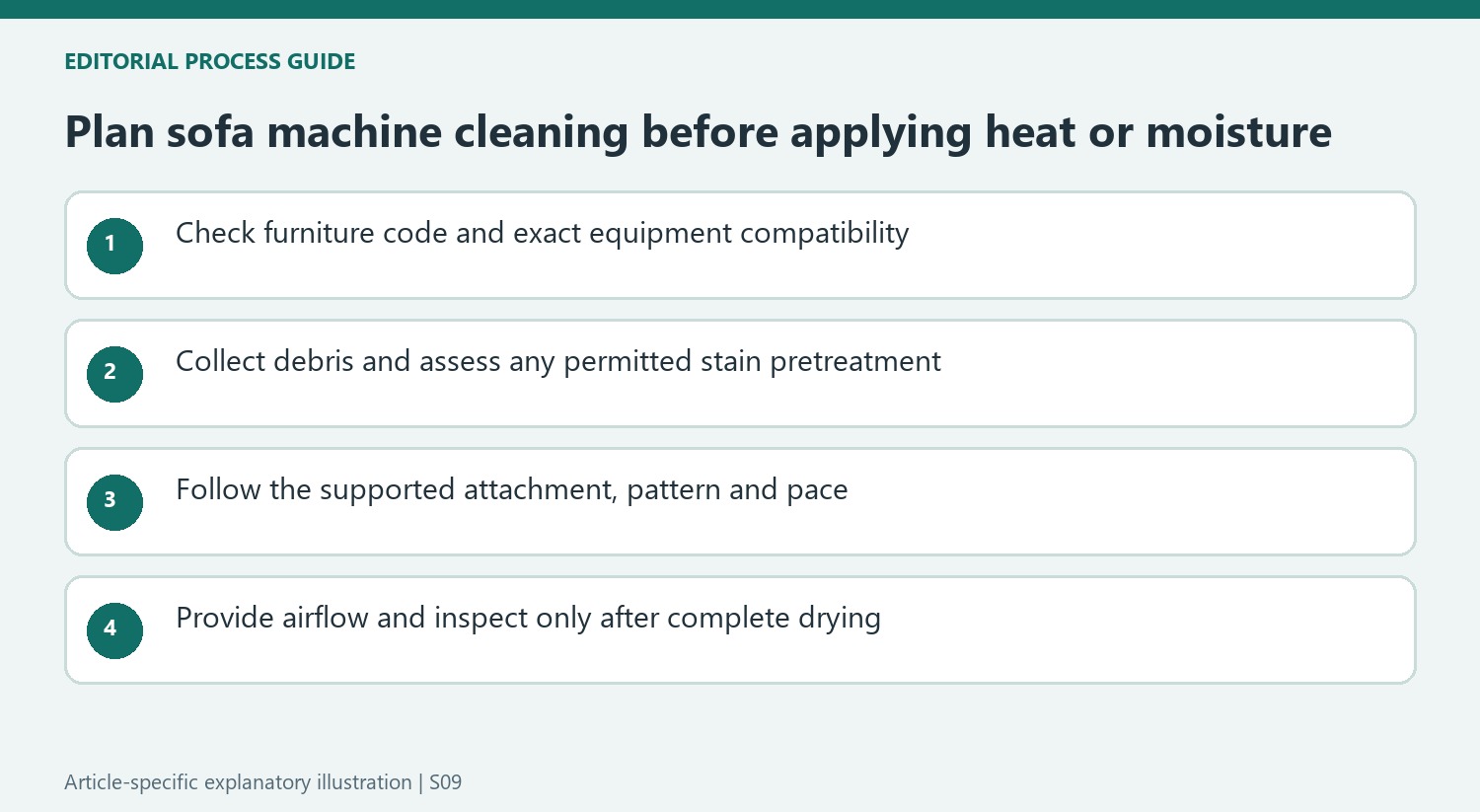
Where the couch and equipment permit steam cleaning, follow the machine manual and use an orderly pattern of overlapping passes. The guide warns against holding the steamer over a single area too long, which can leave it excessively wet. Afterward, provide ventilation and circulating air and wait until the couch is fully dry. The specific fabric, room conditions and soil level matter more than treating steam as a universal shortcut.
Use preparation to reduce repeated machine passes
BHG recommends addressing individual marks before the permitted steam stage, using a product suited to the upholstery and testing it in a concealed area. This can reduce how often a machine needs to pass over one spot and how much moisture reaches the padding. A suitable upholstery attachment and the correct water or cleaning-solution requirements must come from the equipment manual. Steam machines and extraction machines do not all work the same way. After cleaning, inspect only once the fabric has dried fully, then vacuum any remaining loose residue if the care instructions allow. Persistent odors or stains can justify specialist advice.
Resolve fabric and equipment permission before the machine stage
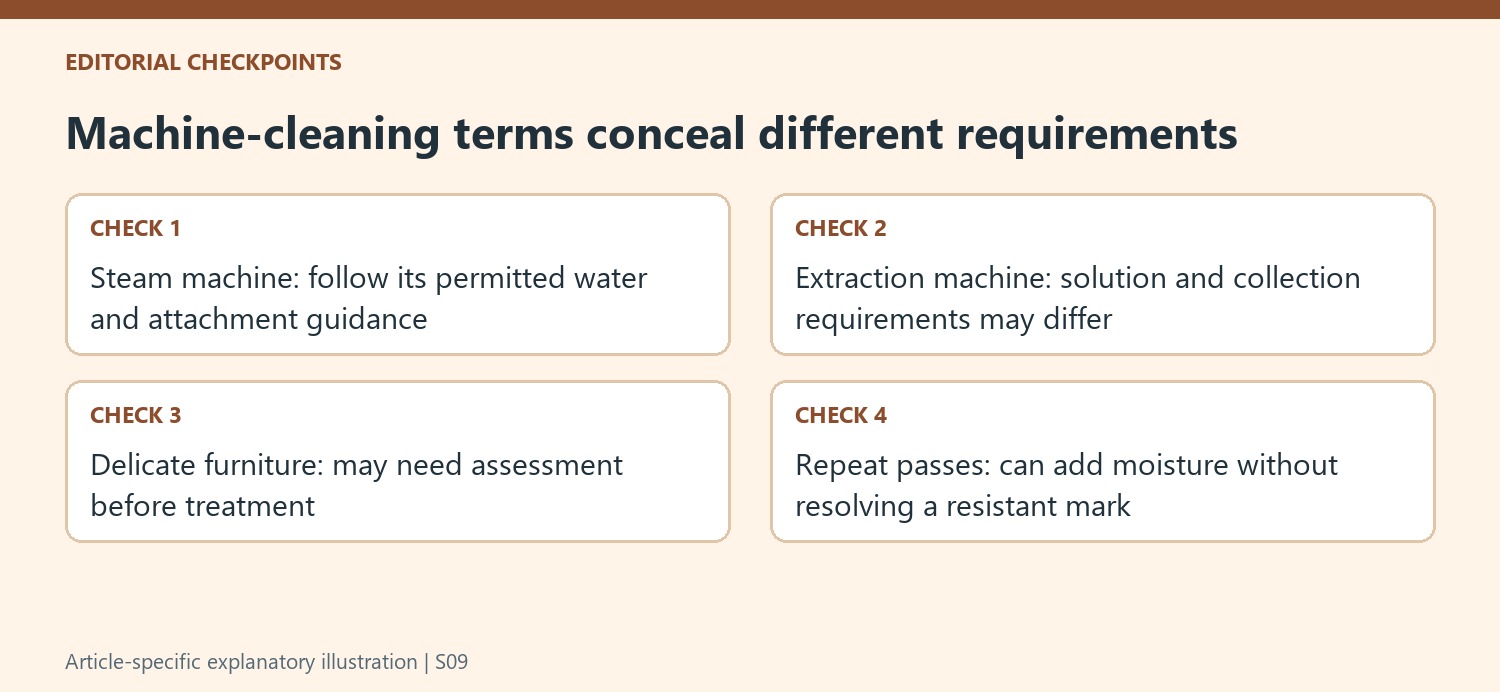
Better Homes & Gardens identifies upholstery type and manufacturer guidance as the starting point. A machine marketed for household cleaning is not automatically suited to every sofa, and a broad fabric name does not describe its backing or finish. Locate the care code and check the furniture maker's requirements together with the equipment manual. Delicate, antique or previously water-damaged pieces may need professional assessment before any heat or added moisture is considered.
The guide uses the term steam cleaning broadly while also discussing equipment that may handle a solution. Actual steamers and extraction machines have different operating systems, so follow the exact machine's permitted water, product and attachment instructions. Do not pour detergent into a water-only tank because another article describes shampoo. The cleaning method must be acceptable to both the couch and the equipment, rather than inferred from a shared marketing term.
Make preparation reduce concentrated repeat passes
Collect loose debris before any permitted machine work, using suitable gentle tools from the upper surfaces into seams and cushion gaps. Remove and wash covers only if their own labels permit it. The source also recommends addressing identified marks with an appropriate tested product before the fuller stage. That preparation can reduce repeated attention to one spot, limiting how much moisture reaches the upholstery while the operator tries to chase a stubborn stain.
Keep pretreatments conditional on the actual fabric and equipment process. A product intended to be removed during extraction should not be left in a system that cannot collect it. Observe the hidden test after drying and use only the supported dose and contact requirements. A more complicated preparation routine is not necessarily better; each addition needs a clear soil-removal purpose and a permitted way to leave the fabric afterward.
Complete the process with drying and a separate inspection
Where the method is approved, work systematically with the suitable upholstery attachment and the manual's pace and pattern. The source warns against dwelling too long in one area because the furniture can become excessively wet. Overlapping coverage is intended to avoid missing strips, not to encourage repeated saturation. If a stain does not respond under the supported method, assess it rather than holding the machine stationary until the surrounding material is soaked.
Provide suitable ventilation and circulating air, then wait for complete drying before use. Inspect only after that stage, following any permitted final vacuuming of loose residue. Persistent odors or marks may need specialist care rather than another immediate machine session. The frequency should reflect household use, pets, material and room conditions within the maker's guidance. A clear preparation-and-drying plan makes the chosen machine a controlled tool for an identified task instead of a universal shortcut for every upholstered couch.
References
- This Is the Easiest Way to Steam Clean a Couch. Better Homes & Gardens; Nafeesah Allen.
BHG's couch guidance makes fabric compatibility and a controlled cleaning method the starting points for a fuller clean.


Leave a Comment
Comments (0)