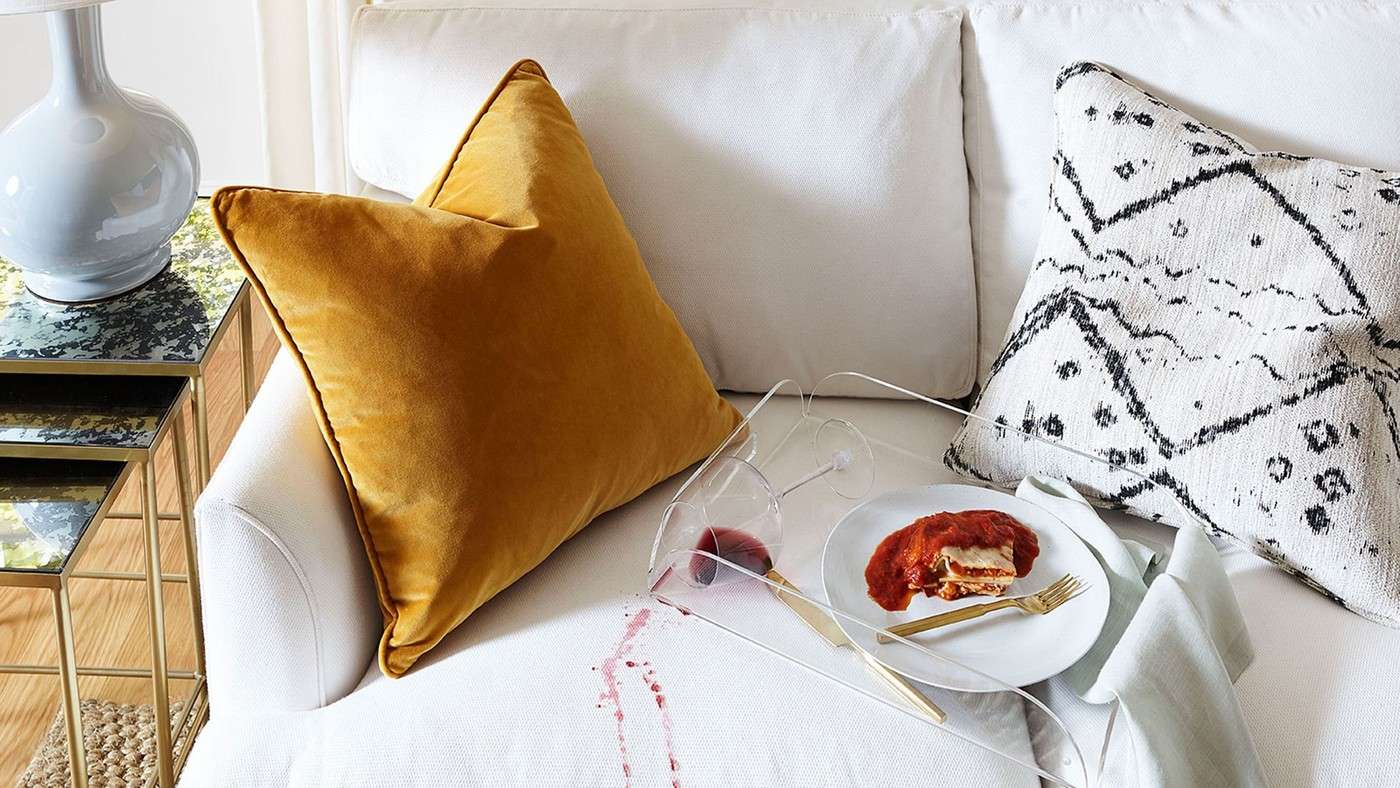
Lift Solid Sofa Spills before Blotting the Fabric
A sofa stained with mud, food, or other solid material needs a different initial step from a liquid coffee spill. The source describes gently lifting residue with the edge of a spoon before working on the remaining mark. Avoid pressing debris farther into the upholstery.
Check the specific sofa care instructions before dampening or adding cleaner. Blot with a suitable clean cloth rather than rubbing aggressively. Fabric, leather, suede, and velvet should not automatically share one treatment simply because they cover the same kind of furniture.
Separate lifting debris from treating the mark
Real Homes recommends a spoon for solid matter in a fresh spill, followed by gentle blotting with a clean absorbent cloth. Avoid dragging the debris across the fabric or rubbing with a disintegrating paper towel. The actual cleaner comes later, after the care code has established what is permitted. Water-based, solvent-only and vacuum-only upholstery must not be given one universal spill recipe.
Use the seams and fabric instructions to plan the area
The source discusses cleaning a complete panel from seam to seam where permitted to reduce uneven drying marks. That advice remains conditional on the fabric and cleaning method. Use a colorfast cloth, a hidden test and the furniture maker's moisture limits. Do not interpret a stain that looks small as permission to saturate a cushion or apply a different household liquid when the label excludes it.
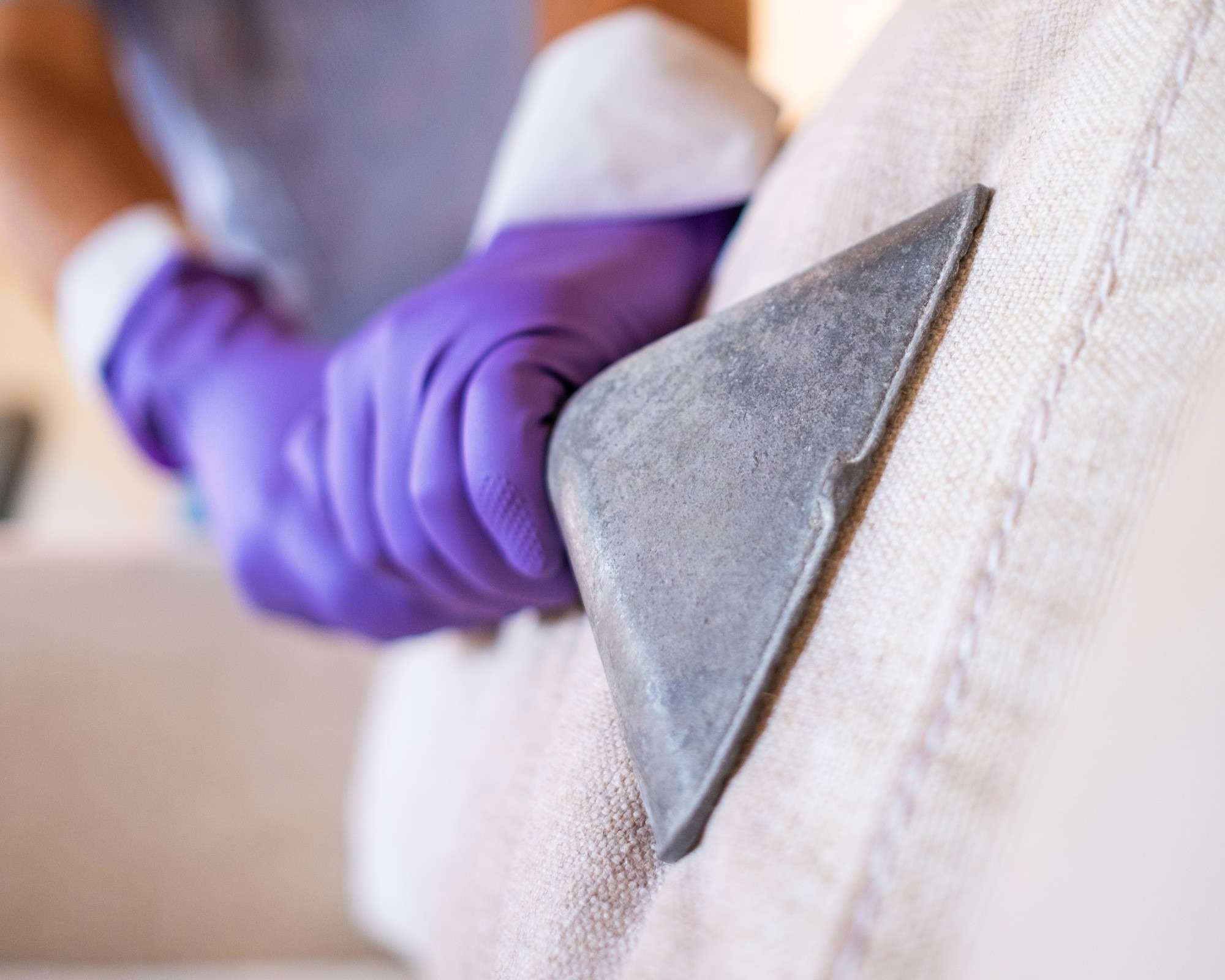
Allow air drying instead of forcing heat into the spot
The experts quoted advise against a hairdryer because heat can fix a stain or affect the fabric. Provide appropriate airflow and keep the seat out of use until dry. The article also recommends regular gentle vacuuming, including below cushions and around the sofa, to stop crumbs becoming embedded. Removable covers should be washed only when their label permits it, and persistent contamination or uncertainty may require professional assessment.
Match the first action to the form of the spill
Real Homes distinguishes a spill carrying solid matter from a liquid mark. Lift accessible food or mud gently with the edge of a spoon before touching the remaining moisture with absorbent material. Avoid dragging that solid across a wider patch of the weave. A coffee spill without solids needs a different initial collection step, which is why reaching immediately for a damp scrubbing cloth is not a universal response to everything that lands on a sofa.
Blot with a suitable clean cloth and rotate to fresh areas as material transfers. A paper towel that disintegrates can add fibers while rubbing drives the spill farther into the textile. Keep the action restrained and separate it from the later choice of a stain product. The source's examples cover several coverings, but a fabric couch, leather, suede and velvet should not inherit one another's liquid or tool permissions simply because each is called a sofa.
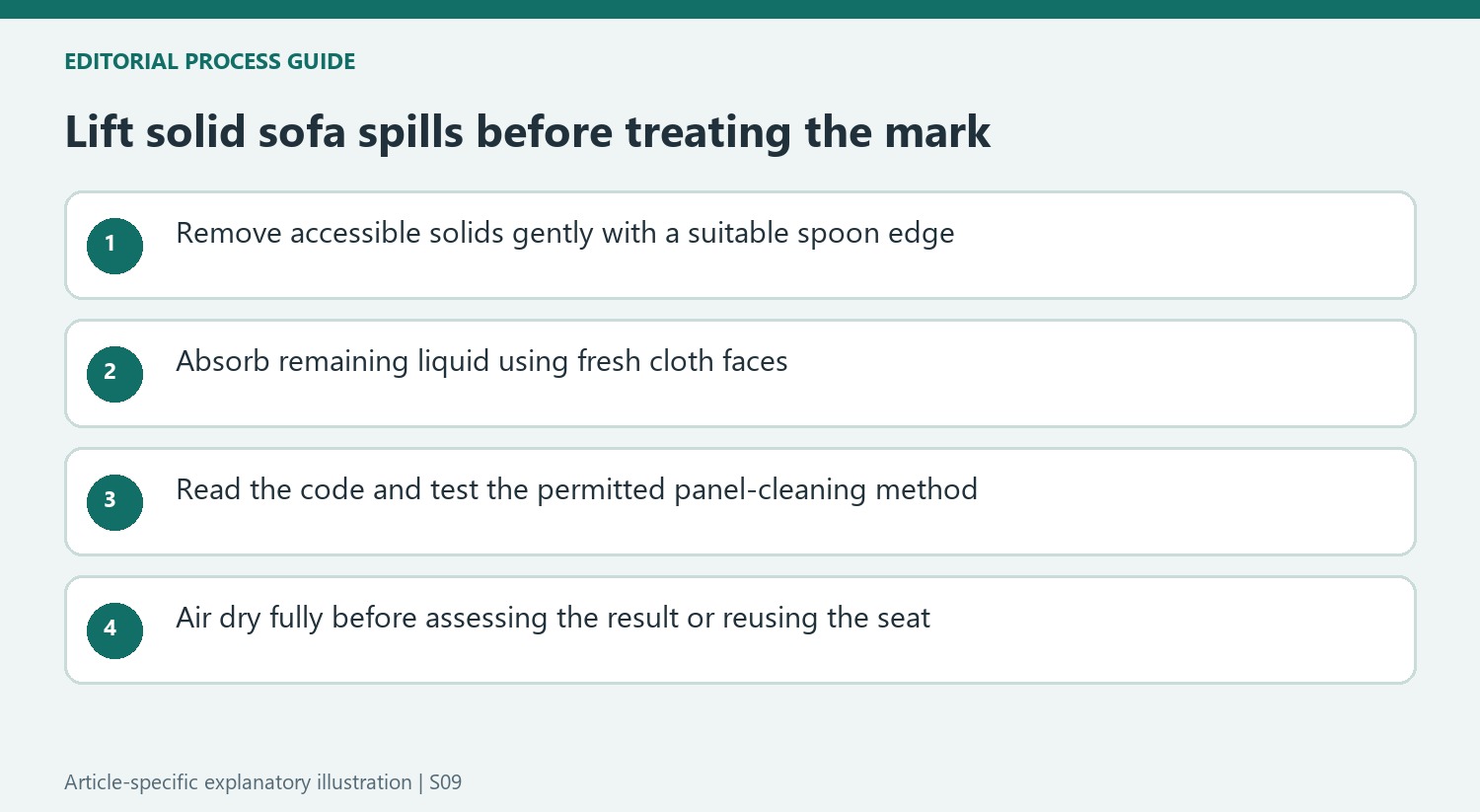
Let the label define the area and moisture limit
Read the actual care code before dampening the fabric further. The article lists water-based, solvent-only, combined and vacuum-only categories, making the tag more useful than an improvised household recipe. Use a colorfast cloth and a hidden test for the permitted method, observing its dried result. A small visible stain can still be damaged by an unsuitable liquid, and its size does not establish that a cushion's inner material can tolerate soaking.
The source discusses seam-to-seam cleaning where permitted to reduce uneven drying outlines. Treat this as a panel-planning decision within the approved method, not permission to wet the entire cushion whenever a mark appears. The correct extent depends on fabric, construction and product guidance. If instructions conflict or a finish is uncertain, obtain advice instead of repeatedly widening the treated area until the original small spill has become a much larger damp patch.
Finish through airflow rather than forced heat
The quoted experts advise air drying and caution against a hairdryer, which can affect fabric or set a stain. Provide appropriate circulation under the furniture's care requirements and keep the seat out of use until it is fully dry. Inspect the result then, because a wet patch can hide an outline or texture change. Repeated rubbing while the area is still damp makes it harder to distinguish surviving contamination from an effect of the cleaning process.
Continue gentle vacuuming of permitted surfaces and the areas beneath cushions so ordinary crumbs do not become embedded between incidents. Wash removable covers only when their own instructions allow it; a zipper is a construction feature, not a laundering guarantee. Persistent stains, difficult contamination or uncertainty about the covering can justify professional assessment. The useful spill routine remains calm and staged: lift solids, absorb liquid, check the material, use the compatible method and let the final result dry before judging it.
References
- How to clean a couch – give fabric and other types of sofa special treatment to lift stains and dirt. Real Homes; Christina Chrysostomou; Sarah Warwick.
Removing residue gently helps avoid spreading a localized mess.


Leave a Comment
Comments (0)