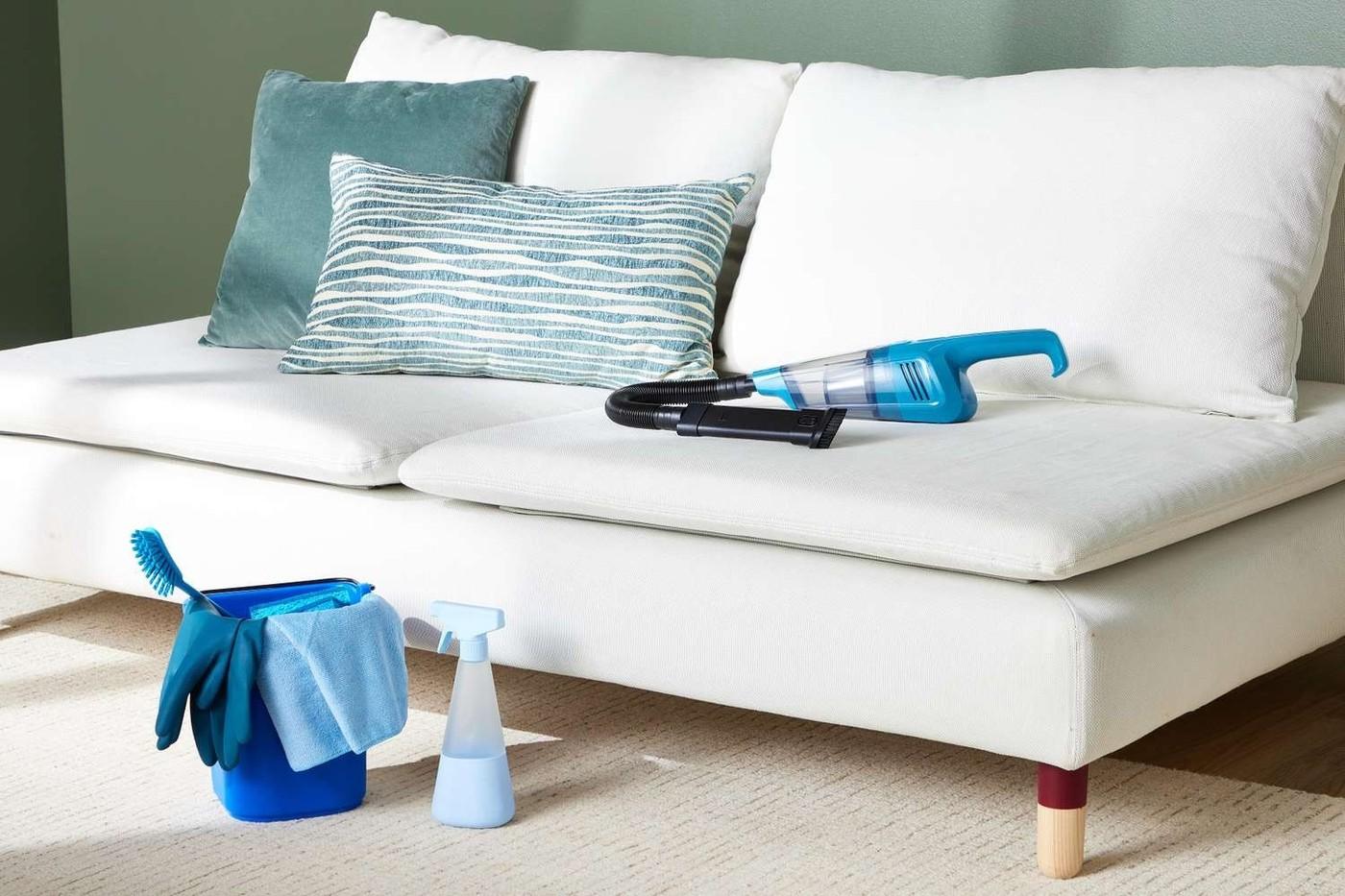
Let the Sofa Care Code Control a Quick Clean
Real Simple separates fabric compatibility from the speed of cleaning and emphasizes removing residue and drying fully.
Read the tag before mixing a cleaner
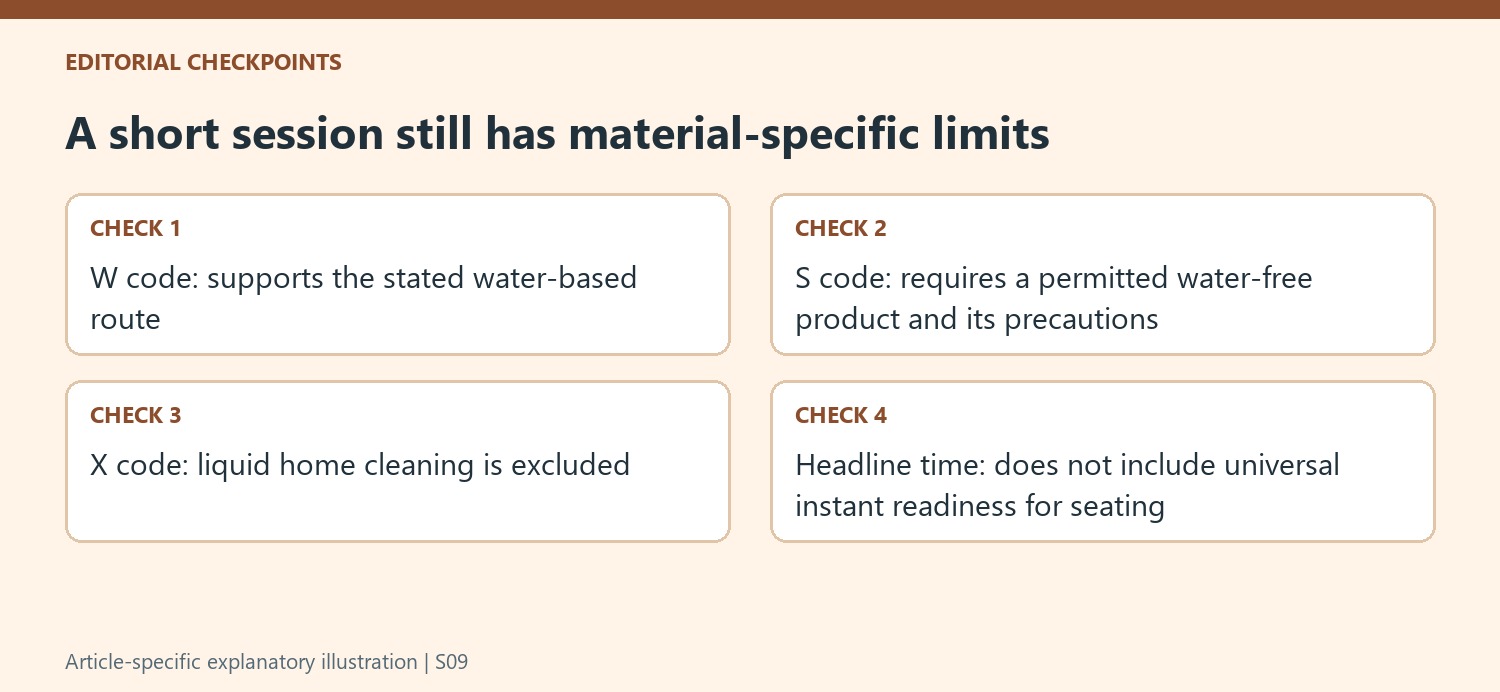
Real Simple explains that W permits water-based solutions, S calls for a water-free solvent, WS allows either and X requires vacuuming or professional care. A missing label is a reason for a hidden-area test rather than an assumption. The article also stresses ventilation and separation from flames or heat when solvents are used. Its quick-clean description therefore does not mean every fabric receives the same liquid treatment.
Collect soil and remove cleaning residue
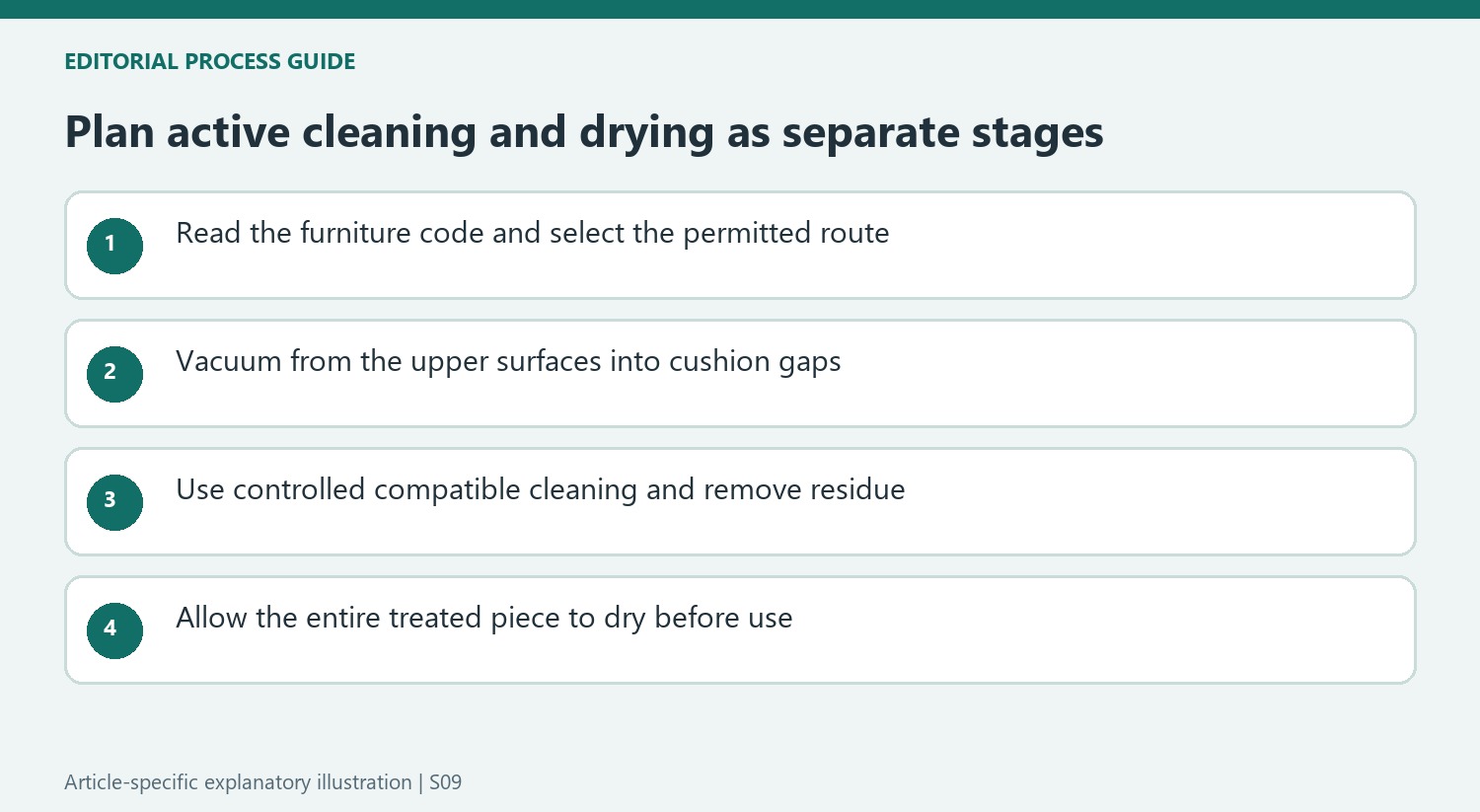
Start high on the furniture, using the upholstery brush and crevice tool to reach sides, backs and areas under cushions. For a suitable water-based routine, keep the sponge damp rather than dripping and clean in sections. A separate clean damp cloth removes remaining soap, which otherwise attracts fresh dirt. Allow the piece to air dry fully before use, with a fan if needed and without direct heat or strong sun.
Treat the headline time as active work, not drying time
Real Simple's quick-clean approach still ends with waiting until the fabric is completely dry before using it. The active wiping stage and the drying period are separate parts of the task. Circulating air can help, while direct heat and strong sunlight are discouraged. The article also distinguishes weekly vacuuming from fuller seasonal or condition-based attention. Protective coverings and prompt crumb or spill removal reduce what later cleaning needs to address. Keep the hidden test and code check even for a small task: a short cleaning session can still cause a visible change if the selected liquid is wrong for the upholstery.
Use the care code before the quick-clean clock starts
Real Simple's short active-cleaning approach begins with compatibility rather than speed. Locate the tag and distinguish water-based, solvent-based, combined-permission and vacuum-only routes. A missing code does not mean the furniture is unrestricted. Obtain maker guidance where possible and use an appropriate concealed test before wider treatment. The amount of time available cannot change how a fabric, backing or finish reacts to a liquid it was not intended to receive.
Where a permitted water-free solvent is involved, the source stresses ventilation and distance from heat or flames. Follow the actual product's current instructions rather than treating the word dry as proof that the job needs no special handling. Keep the solvent route separate from a water-based bowl-and-sponge method. The code decides what can be selected; a convenient household product should not decide how the code is interpreted afterward.
Remove loose soil before cleaning solution touches the weave
The article starts high and works down with appropriate upholstery and crevice attachments. Include backs, sides and the space beneath removable cushions so loose dust does not turn into a broader damp film. Use suitable gentle debris-removal tools for pet hair as required by the furniture. A cleaner cannot replace that preparation by dissolving every crumb or hair, and retained particles can make a quick wash look less effective than it actually was.
For a supported water-based process, keep the cleaning sponge damp rather than dripping and work in sections. Refresh it as soil transfers, then use a separate clean controlled-damp cloth for the permitted residue-removal stage. Detergent left in the fibers can attract fresh dirt according to the source. More foam is therefore not automatically an improvement; the job includes taking the product away, not merely spreading a pleasantly scented layer over the seats.
Schedule the wait as part of the completed job
The headline time concerns active tasks and should not be read as a promise that a cleaned sofa is ready to sit on immediately. Let the piece air dry fully under its care guidance, using suitable circulation where needed and avoiding direct heat or strong sun. Plan the household's seating needs before wet work begins so the drying stage is not cut short because the favorite chair is needed again.
Weekly vacuuming, condition-based fuller care and prompt spill collection address different levels of use. A protective covering can reduce exposure where appropriate, but it also needs its own care routine and should not conceal unresolved dampness. Inspect the fully dried result before choosing another treatment for a mark. The practical quick-clean method succeeds through a bounded compatible task, efficient preparation and complete drying, while the material limitations remain just as important as they would during a longer cleaning session.
References
- How to Clean Upholstery in 15 Minutes or Less. Real Simple; Christina Yeotsas.
Real Simple separates fabric compatibility from the speed of cleaning and emphasizes removing residue and drying fully.


Leave a Comment
Comments (0)