
Vacuum Every Side of the Sofa Before Deeper Cleaning
The Spruce recommends loose-soil removal and restrained moisture only when the furniture care instructions permit it.
Reach more than the seat cushion
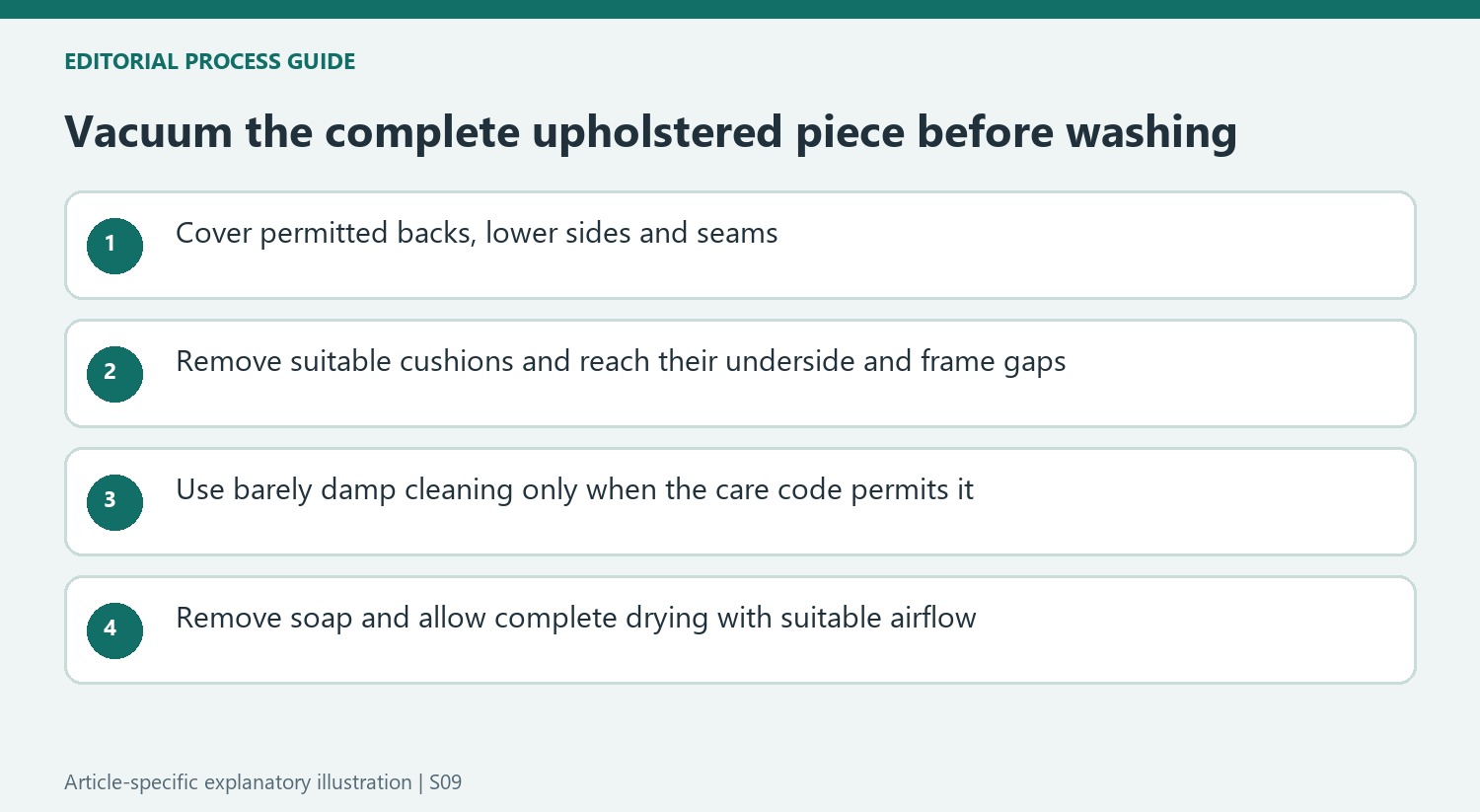
The Spruce describes vacuuming upholstery weekly and remembering the back, lower sides and areas between the frame and cushions. Remove loose cushions where possible and clean both sides. A crevice tool reaches spaces that a broad brush misses. This removes loose material before it can be pushed around by a later cleaning step. The article recommends finding the care tag before choosing any liquid method.
Keep permitted cleaning light
Where the fabric allows a water-based process, the guide describes a diluted dishwashing-liquid solution and a sponge or microfiber cloth wrung until barely damp. Work in small sections and keep moisture off susceptible metal components. Follow with a clean damp cloth to remove soap, then blot with dry cloths. A circulating fan can assist drying, while direct heat is discouraged. The method is conditional on fabric compatibility rather than permission to soak any upholstery.
Blot a new spill before it penetrates further
The Spruce advises absorbing fresh liquid promptly and lifting solid food with a suitable dull edge instead of rubbing it into the weave. This is separate from the overall upholstery wash: a new spill may be managed before it becomes a large stained area. Keep a clean part of the cloth against the fabric as material transfers. The guide also recommends maintaining the floor around and beneath the furniture, where dust can continue to collect. Move or tilt a heavy piece only with appropriate assistance. Inspect the care label before adding cleaner, because successful dry vacuuming does not establish liquid compatibility.
Map the vacuuming route beyond the favorite seat
The Spruce recommends regular thorough vacuuming, including the lower sides and back even when the furniture is against a wall. Plan an orderly route so those quiet areas are not overlooked after the seat cushions look clear. Use the tool appropriate for the upholstery and inspect seams where particles settle. The point is to collect loose soil before any permitted damp work, not to make one visible cushion appear cleaner while debris remains nearby.
Remove cushions only where the furniture design permits it and reach both faces and the space between cushion and frame. Use a suitable crevice attachment for narrow gaps rather than forcing a broad head against trim. Floor dust underneath the couch is another separate reservoir. Clean accessible surrounding floor routinely, and obtain appropriate help for any movement of a heavy piece rather than turning an ordinary vacuuming session into unsupported lifting or tilting.
Keep a water-based wash conditional and restrained
The source describes diluted dishwashing liquid for upholstery that permits a water-based route. The care tag must establish that permission before a bowl is mixed. Use the supported method and a sponge or microfiber cloth wrung to barely damp, working in manageable sections. A general cleaning ratio is not a reason to saturate cushions or assume that solvent-only and vacuum-only fabrics tolerate the same approach because the moisture looks slight.
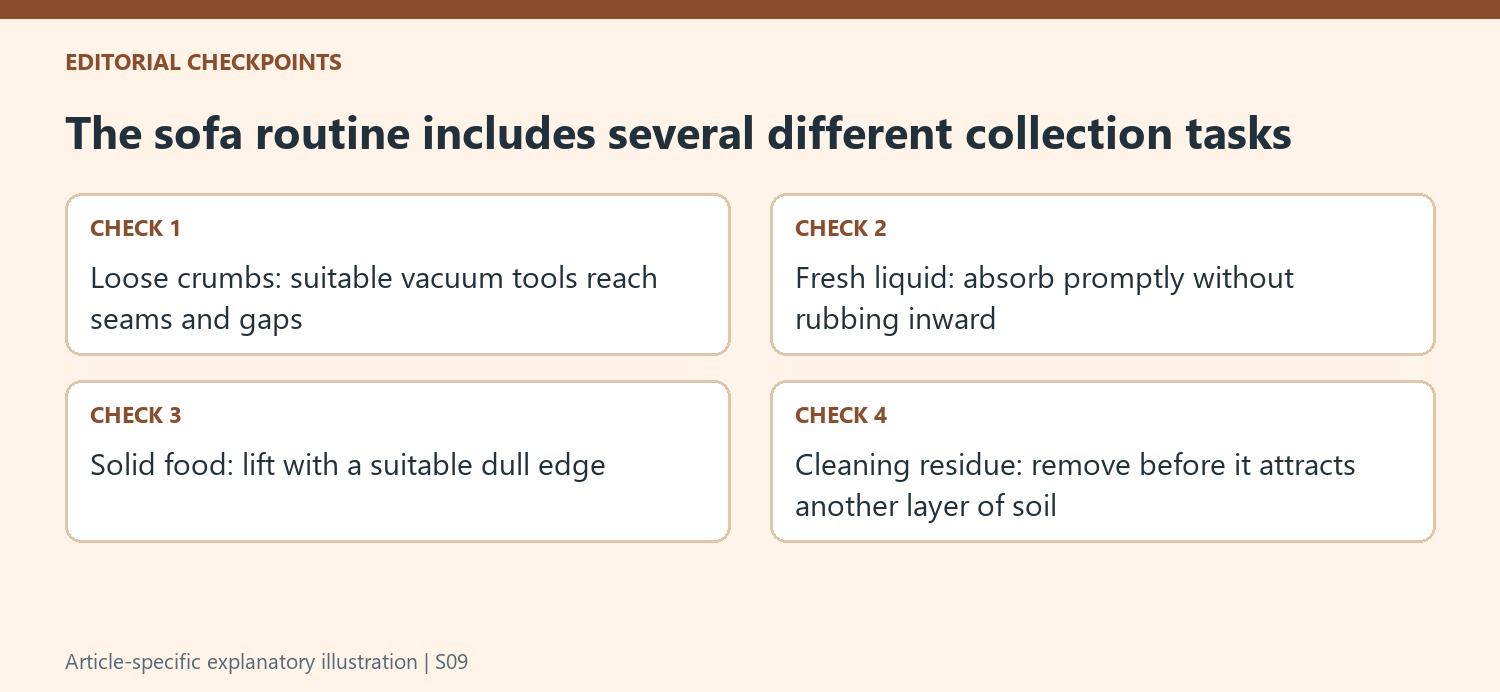
Keep wet contact away from vulnerable metal buttons, snaps and legs where the guide notes the possibility of rust marks. This expands the material check beyond the fabric itself. Collect dirty solution with fresh suitable cloth faces and remove detergent under the approved method. Leaving soap in the weave can attract more soil, so the rinse or residue-removal stage contributes to the durability of the clean rather than being an optional cosmetic finish.
Respond to spills without skipping the drying stage
For a new liquid spill, blot with clean absorbent material while it can still be collected. Lift accessible solid food with a suitable dull edge instead of rubbing it into the textile. These first actions are different from selecting a stain cleaner and should not expand into a universal recipe. Once the loose material is removed, follow the care code and test requirements for any further treatment of the remaining mark.
Use the approved drying conditions and keep the upholstery out of use until fully dry. The source favors circulating air over direct heat from a hairdryer. A dry-looking face can be misleading if excessive liquid reached deeper material, another reason for restraint earlier. Evaluate the final result only after drying and continue regular debris collection. Thorough preparation, compatible moisture and complete residue removal make a more dependable routine than repeatedly washing the same neglected seat while ignoring its surrounding frame and floor.
References
- Take a Good Look at Your Couch. Could It Use a Good Cleaning?. The Spruce; Mary Marlowe Leverette.
The Spruce recommends loose-soil removal and restrained moisture only when the furniture care instructions permit it.


Leave a Comment
Comments (0)