Give Everyday Sofa Soil Attention before a Major Spill
A couch can become soiled through daily contact even when nobody spills wine or juice. Sweat, pets, and sticky fingers affect cotton, microfiber, leather, and other coverings over time. Inspect the surface and care label before deciding on routine or deeper cleaning.
Start by removing loose debris, then treat the actual material using its approved method. A quick spot clean and a full extraction are different jobs with different moisture demands. Regular attention can prevent the sofa from being ignored until the accumulated dirt is difficult to manage.
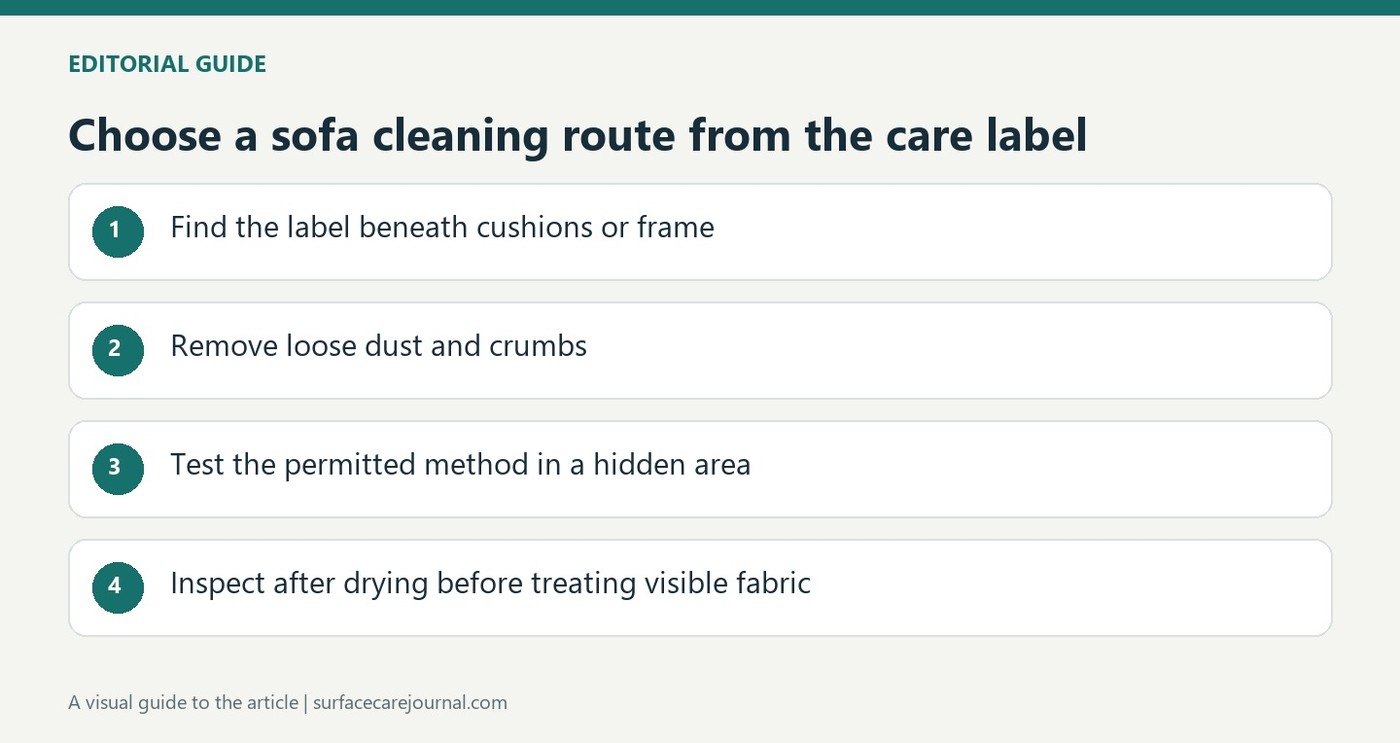
Let the care code control the cleaner
Architectural Digest emphasizes finding the tag beneath a cushion or under the frame before choosing products. W indicates a water-based route, S calls for a suitable water-free solvent, and X rules out liquid home cleaning. Follow the actual label rather than identifying the method from appearance alone. Microfiber, for example, can still have restrictions that differ from another fabric sofa in the same room.
Collect loose material before treating a stain
The experts recommend thorough vacuuming of fabric upholstery, paying attention to seams, crevices and both sides of removable cushions. The article discusses dusting leather with a soft cloth and cautions that its leather instructions do not apply to suede. A fresh spill should be absorbed promptly instead of scrubbed, because pressure can push material deeper or alter the texture even if the visible stain lightens.

Allow a hidden test to dry before proceeding
The source recommends trying the proposed permitted product in an inconspicuous area and observing the fully dried result. This checks color and texture before a visible panel is treated. Use only the amount of moisture allowed by the upholstery and avoid treating steam as universal disinfection. A removable cover is machine washable only when its own instructions say so; a zipper alone is not evidence that laundering is appropriate.
Inspect the contact areas that collect gradual soil
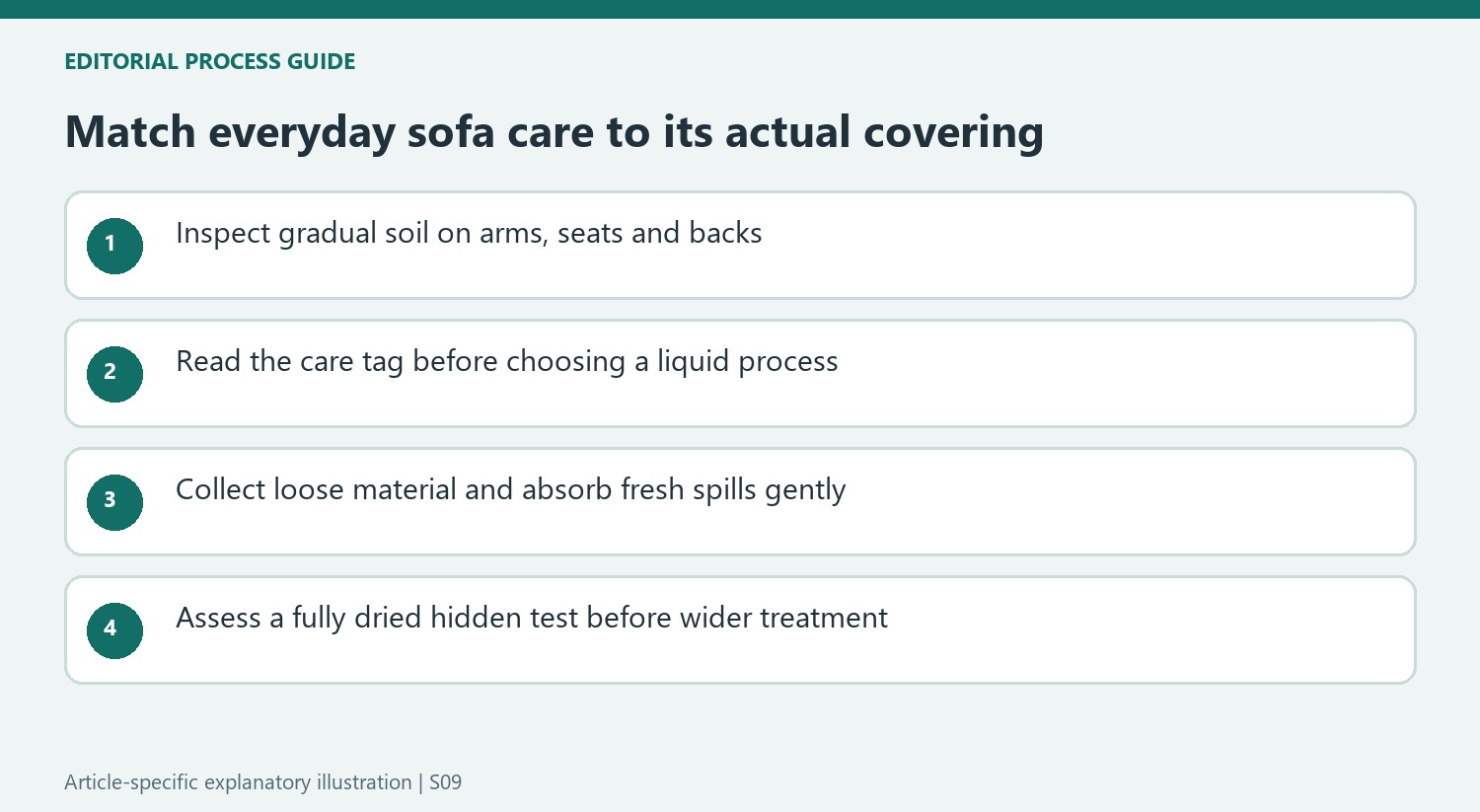
Architectural Digest points beyond dramatic spills to ordinary sweat, pet contact and sticky fingers. Look at the arms, preferred seat and upper back as well as any obvious stain. This establishes whether the task is loose-debris collection, local treatment or an overall material-approved clean. A couch can need attention before a single incident makes it look dirty, yet that observation does not mean every lightly used area needs the same intensive liquid process.
Find the actual care tag rather than identifying a method from appearance alone. Similar-looking sofas may use different fiber blends, backing and protective finishes. The source emphasizes the risk of using a water-based approach on a solvent-only fabric or a solvent on an incompatible surface. Keep those categories distinct and consult the maker when guidance is missing. A general description such as microfiber does not supply the complete cleaning permission for the finished piece.
Collect debris without pushing it through the weave
Use the suitable upholstery attachment across the permitted fabric surfaces, then a crevice tool where crumbs gather near cushions and seams. Clean both sides of removable cushions where their design allows access. Leather begins with appropriate gentle dusting in the article, and its leather discussion expressly excludes suede. Preserve that distinction rather than turning every covering into a candidate for the same damp cloth, solvent or conditioner.
When a spill is fresh, absorb it promptly with suitable clean material instead of pressing or rubbing it into deeper layers. Rotate to a fresh absorbent face as liquid transfers. A large stain does not become easier to remove merely because a cloth is moved vigorously over it. Extra pressure can change the texture even if some color lifts, leaving a new visible problem after the original mark appears less obvious.
Plan the drying and the next use before adding liquid
The source calls for a concealed-area test and observation once it is fully dry. This is different from deciding that a wet test looks fine and proceeding immediately across the seat. Check color, texture and any drying outline before continuing with a permitted product. Keep the moisture within the manufacturer's limits and distinguish a spot clean from a full extraction job, which can affect more of the upholstery's internal layers.
A zipper does not establish that a cover can enter the washing machine, and heat should not be treated as universal permission to steam or disinfect the couch. Follow the specific cover and furniture instructions. Appropriate protective throws and prompt ordinary debris removal can reduce later soil where household use is demanding. The aim is a routine suited to the actual covering and its daily exposure, preserving the sofa while making deeper treatment an informed choice rather than the first response to every mark.
References
- How to Clean a Couch: An Expert Guide to Sprucing Up Your Sofa. Architectural Digest; Bridget Reed Morawski; Steven John.
Body oils, pets, and regular use can leave marks without an obvious accident.


Leave a Comment
Comments (0)