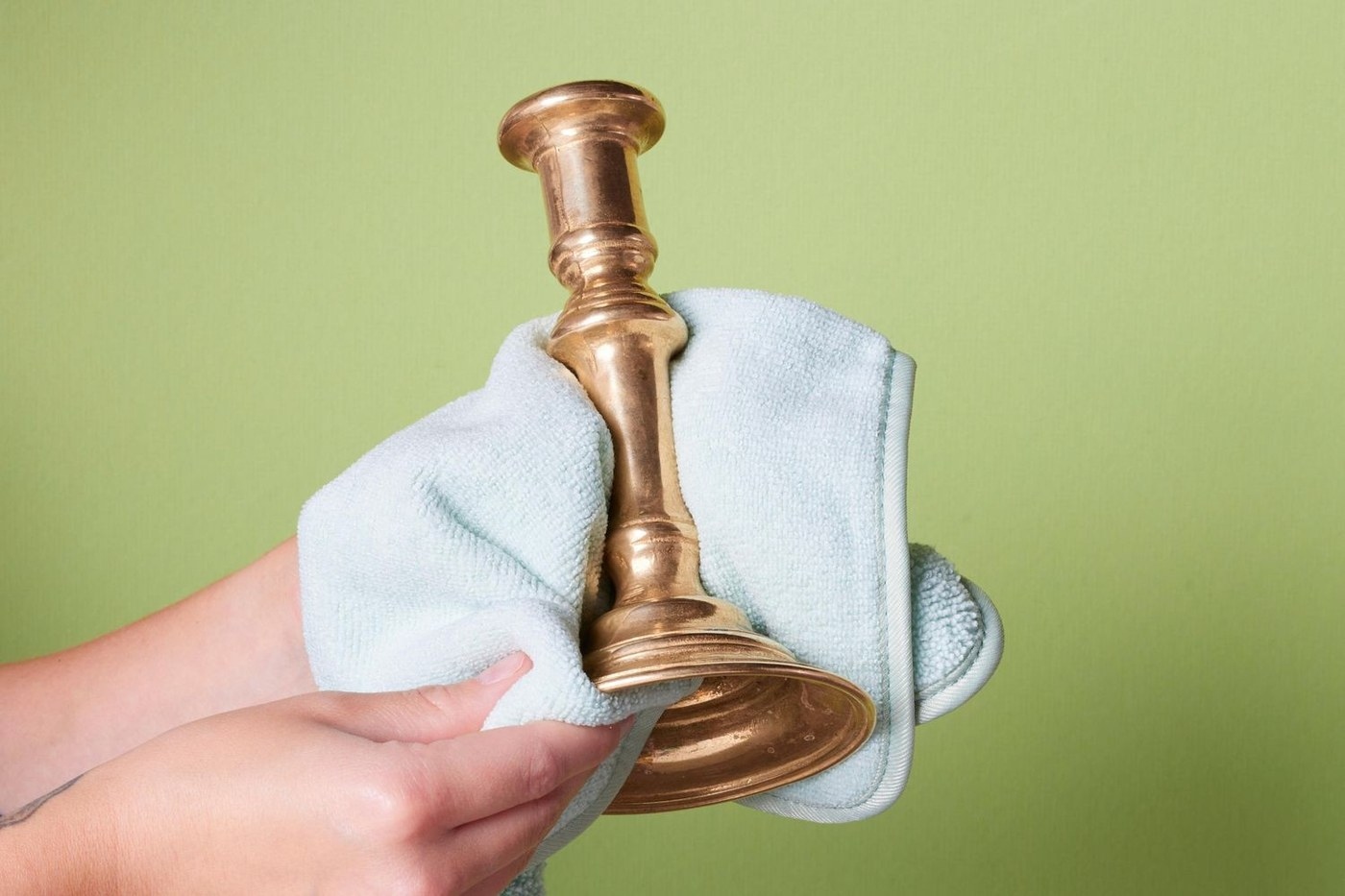
Check Whether Brass Decor Is Plated or Protected by Lacquer
Real Simple explains why the finish controls whether an ornament needs only gentle dusting or an appropriate tarnish treatment.
Do not treat every brass-colored object alike
Real Simple explains that a piece may be solid brass, a thin brass layer over another metal or brass protected with lacquer. Those differences change how much cleaning and polishing it can tolerate. A magnet that sticks can indicate a plated base, so use particular care with that surface. Intact lacquer should generally receive dusting or a gentle damp wipe rather than an aggressive tarnish-removal recipe.
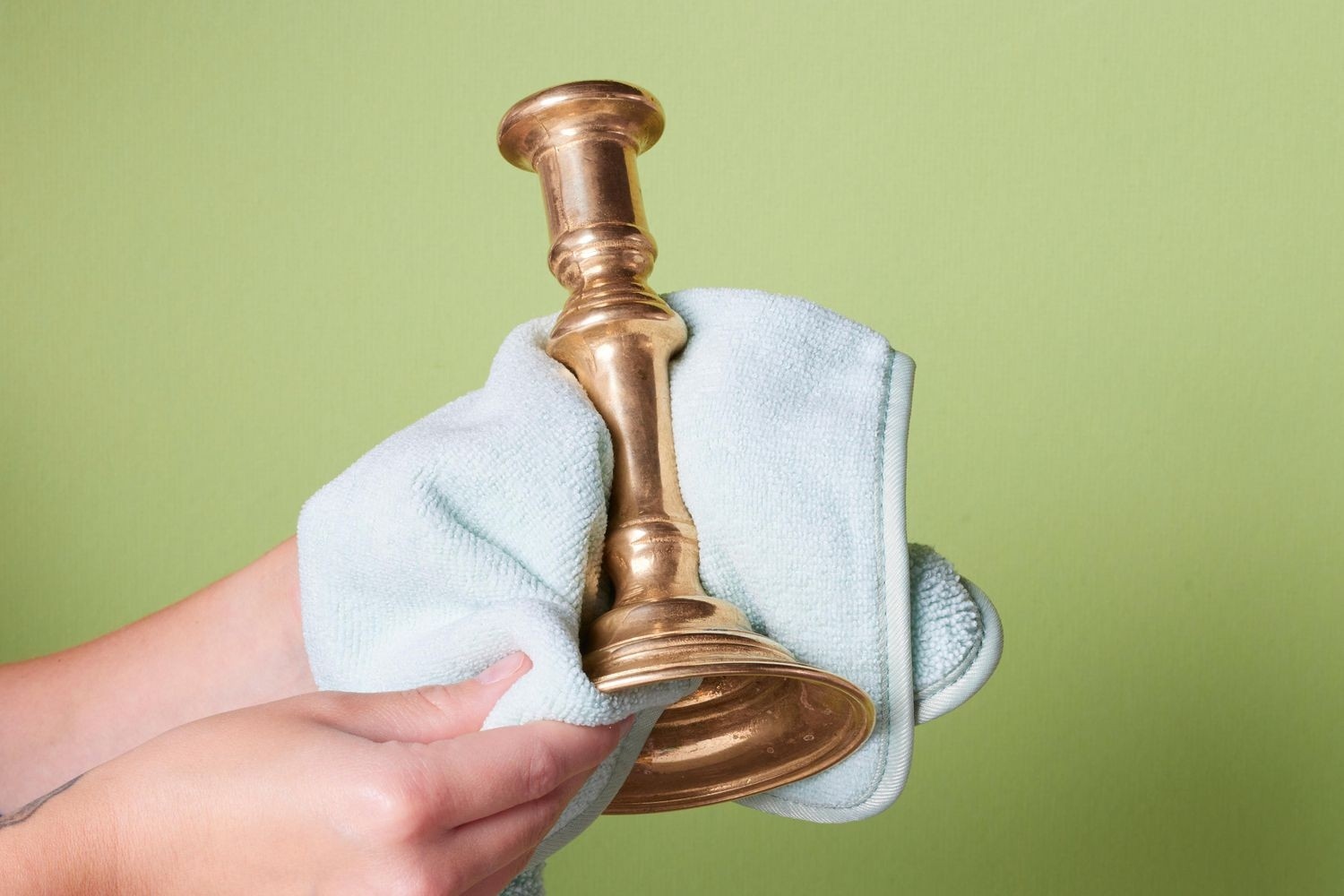
Keep decorative care restrained
The guide notes that skin oils and air exposure contribute to tarnish on uncoated brass, while some owners prefer the darker aged appearance. Dust decorative pieces and limit unnecessary handling rather than repeatedly polishing away a patina that is wanted. For an appropriate uncoated piece, remove ordinary grime before a suitable tarnish treatment, then rinse thoroughly and dry with a lint-free cloth. Product compatibility matters more than whether an ingredient happens to be in the kitchen.
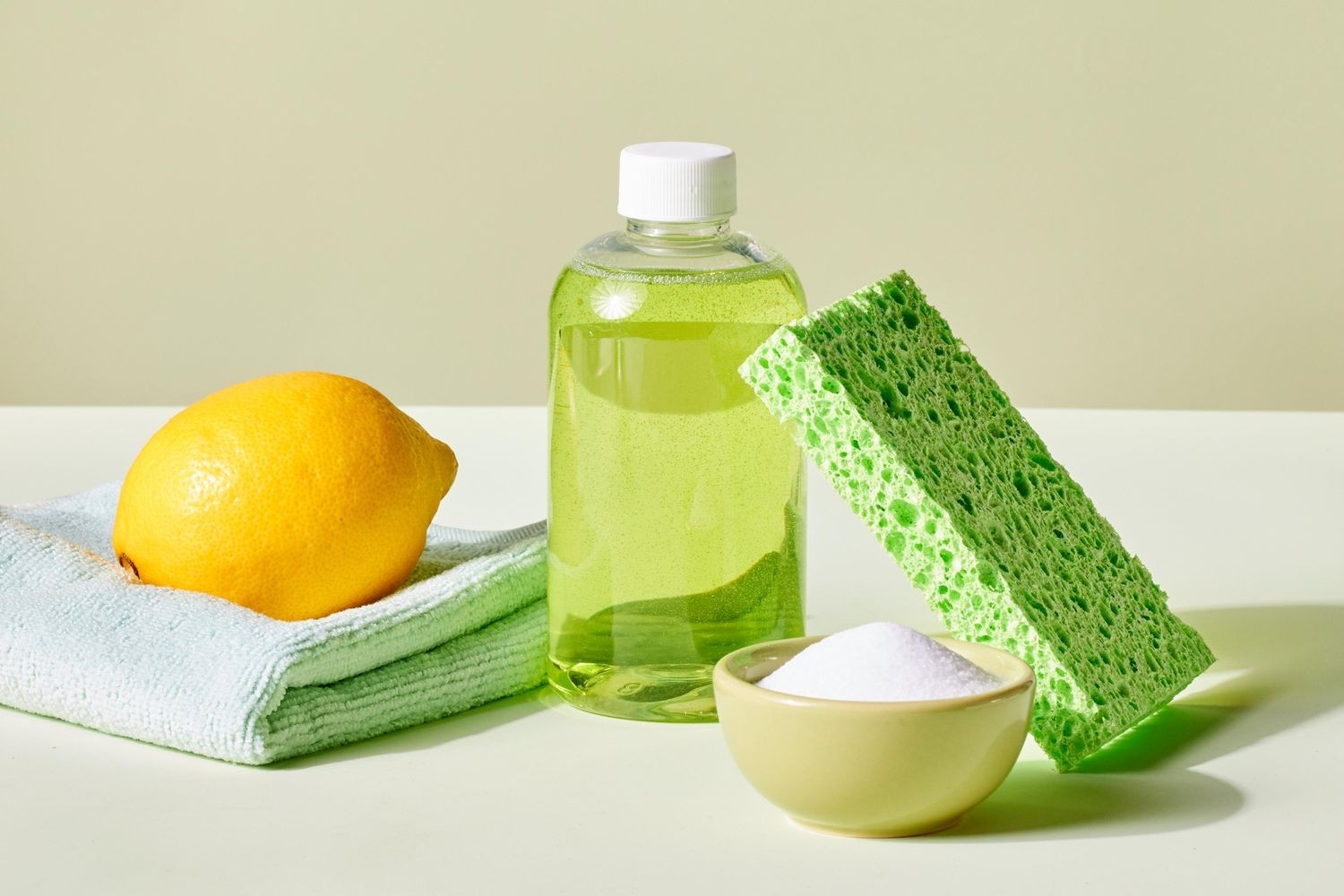
Real Simple explains why the finish controls whether an ornament needs only gentle dusting or an appropriate tarnish treatment.


Leave a Comment
Comments (0)